Guest author Avinash Chandarana, MCI Group, Learning & Development Director
How can a virtual learning experience maintain sufficient levels of attention? How can engagement be driven in the online space? Applying neuroscience principles to virtual experience design can lead to higher levels of engagement, content retention and ROI.
People attend events because they want to see, learn, share, and network with peers. While formats differ and need to adapt for the online space, it is key to ensure that the virtual edition is an experience that delivers the intended expectations. To achieve that, the brain becomes the central focus of online experience design.
Why the brain? The brain is our primary tool for learning. It’s the core of human thought, memory, consciousness and emotion. So, it only makes sense to align online session design with how the attendees brain functions and invariably connects with an online experience.
Applying basic principles and research in neuroscience, adult learning and today’s consumer learner behaviour can have a great impact on the design of effective online experiences. Weaving these principles into an overall design strategy leads to higher levels of engagement, content retention and ROI.
Here are 6 neuroscience-based tips to help you design relevant and engaging virtual experiences for your attendees.
1. Break content into bite-sized chunks
Chunking is the concept to remember. According to a renowned psychology paper, the number of information a person can consciously process is seven, plus or minus two. Just as trying to carry too many things at once might cause you to drop something, requiring learners to grasp too many concepts at once can cause them to ‘drop’ that information. The chunking technique enables the brain to digest and assimilate content more effectively, making it far easier to integrate into long-term memory.
2. Introduce a jolt
The common assumption is that during any face-to-face sessions, attention is at its highest in the first 10 to 12 minutes and then drops as the attendee gets tired of concentrating or gets distracted. In online sessions, the attention span can be as short as 3 to 4 minutes.
However, studies show that the attention is greater when the speaker introduces something new or different, such as humour or visual aid, thus breaking predictive behaviour. This element of change, ideally involving some sort of interactive feature, is essential in a virtual environment.
3. Enhance the relevancy of learning
The relevancy of a session should become obvious within the first five minutes by showing learners that it will address their concern. This is because relevance plays a crucial role in cognition. When information is perceived as relevant, cognitive efforts significantly increase, leading to much higher cognitive effects.
4. The spacing effect
In 1885, psychologist Hermann Ebbinghaus found out that people forget a whopping 80% of material learned within 24 hours. This discovery led to the so-called “Forgetting Curve”. In contrast to crammed, intense learning, learning that takes place over an extended period gives to the brain enough ‘space’ to take in new facts. Attendees will experience greater success by spreading out their content review and recall over time, instead of engaging in one-time, overloaded top-down sessions.
5. Create a multisensory experience
People learn best when all their senses are engaged and when their imagination is most active. Experts confirm that sessions that use two or more senses are more effective than those using only one sense.
Help online attendees create strong and lasting memories by making them imagine colours, hear sounds and experience emotions. Using creative virtual event design, consider activities that require movement, engage taste buds or even the sense of smell.
6. Trigger the right emotions
Learning isn’t merely cerebral – it’s emotional, too. Researchers have confirmed how emotions affect mental processes. Put simply – adults will learn and engage if they care. They’ll pay attention if they feel encouraged. They’ll connect to others if they feel welcomed. Therefore, emotions are too entrenched in the learning process to ignore them as an important learning factor. Triggering the right emotions can help attendees learn better and increase overall engagement during a session.
At MCI, we recognise the challenges that shifting from a physical setting to an online experience entail for organisations. Through our expertise in both online and offline experiences, we guide organisations to successfully transform their conferences, meetings and events to ensure the highest value for all stakeholders to learn how to apply neuroscience to a virtual experience that achieves your objectives.
Guest author Avinash Chandarana, MCI Group, Learning & Development Director
Never waste the benefits of a great pandemic! Prof. Dirk De Wachter, a well know Belgian psychiatrist and author just published his latest book in which he wishes everybody a ‘pandemic of consciousness’. Because of the Covid-19 crisis, we have had time and have been forced to think about things. Everyone has had creative ideas, and nobody believes that everything will be the same again after this. Or will it? Have not we learned from the ‘history repeats itself’ syndrome and going back to our old habits? Many of us have been thinking about overconsumption recently, as shopping became extremely limited. We went back to local producers and local shops, although we could have done that before. Instead of that we settled for the easy solutions. The same applies to mass tourism; leisure travel will probably never be the same again. But what can we learn and what opportunities for the meetings and events industry can we draw from this?
De Wachter hopes that we will think more about the WHY of travelling (I guess he as well watched or read Simon Sinek’s inspirational thoughts). Our future travels should become more conscious experiences. The times of sun, sea and sinful beverages are fading away. Going to another country to do, drink and eat the same as we do at home are supposed to be a thing of the past. Meeting other cultures, being in touch with history and art make our live better. Some trendwatchers state that that people will look with more stillness, durability and sustainability towards life and business, but I do not believe it will change that much. It is going to be too easy to fall back into the old patterns, the old ways of doing things. In the short term for sure we will see people (re)discovering their own country, visiting their own museums, and enjoying the local produce of the land. But once the gates are open again, many will fall back into the old and easy habits.
What’s in it for us now?
In my opinion, the same will apply in our meetings and professional events industries, wherever we are. Due to constraints we will not travel far in the immediate future. We will not be in massive gatherings either. But there is a market in our own countries and regions that we can tap into and who will not travel abroad this time. That is why I believe the market for the foreseeable future will be a domestic, regional even continental market if we are lucky.
I’m writing this article in preparation of a SITE Africa Summit tomorrow where we will debate what opportunities lie ahead for the meetings and events business in Africa. Many of us have not sold to our local market in the past. We have always focused on the long haul inbound or outbound markets. China, the United States and Canada as well as Europe have been the major generating markets for Africa’s tourism and events sector. Unfortunately they also happen to be the highest hit countries by the pandemic. Now regions will have to depend on their closest allies and neighbours. Africa for Africa, Europe for Europe etc. Therefor our national or city convention bureaus and tourism boards must change strategy and create a new and positive imaging, appealing to the short haul markets. We have the advantage that social media are an easy and cheap way of doing this and most of us, who were not social media conscious before, now have had the time and learned to navigate the digital newswires.
At the same time, destination marketeers will need to continue focussing on a number of topics that were hot in the pre-Covid19 age but often put on the backburner: sustainability, ecological load and impact and an economic recession that was announced already before the pandemic on top of it. After the Covid tsunami, we risk of being hit by an even bigger recession tsunami and whatever is left after that will risk destruction due to the climate crisis.
The power of face to face
People travel to dissociate, to take a distance from things and focus for a short while on a different topic or other people. Our meetings and events industries are not so different from that. We go out to a meeting to focus, to learn, to network with people whom we are not dealing with daily. Or to reinforce distant relationships with a face-to-face experience, using all the senses we must understand, share our questions or ‘sell’ our ideas.
With what we have learned during our months of confinement, it is up to us, the industry, to set the new standards, streamline new ways of doing things. Support, letting people work together in a hybrid way. Governments need to be facilitators for this, they must stimulate, support, and create new chances and opportunities. In many countries for instance, unique venues and palaces are not open to the public. Governments can support the industry of giving access to these unique and iconic places. Places of heritage are the jewels in each destination’s crown.
What should government support look like?
In the first phase, governments have tried to support the victims of the Corona crisis in the short term with social security packages and funds. The European Community was leading in this, but some countries have produced almost no support at all. Massive lay-offs and workers being furloughed were in nobody’s plans and for those who forecasted a mini-max in the first quarter of the year have all seen the worst-case scenario becoming reality. The accommodation, restaurant, and cafés industry, together with the business and public events industry have been hit the hardest and were almost wiped off the board. And it is not over yet. Some of these support packages will need to be extended up to at least the end of 2020. It does not suffice to open borders and accommodation again; our industry also has lead times of at least 3 months leading up to an event to cover. Will our business survive? Do we have sufficient reserves? Will we get institutional support?
Now that the gates are opening again, the Belgian government for instance just gave a blanc cheque of 300 Euros to each Belgian; to be spent in hotels, cafés or restaurants or in cultural events. Thai people got the equivalent of 3000 Baht and in Japan the government has handed out cheques of 20.000 Yen plus offered 50% discount on domestic air, sea- or land transport. Blisters on a wound and in political terms leading to a get better feeling of the population. But do they help our live events industry? On top of it, allowing manifestations to take place whilst we keep our doors shut of meeting- and event venues has had very negative feedback from the public.
Rigid health and safety protocols need to be put into place
In the end, it’s up to us to come with solutions and suggestions. In the tourism and professional events industry tourist guides and DMCs will probably be the first enforcers on safety measures in travelling and accommodating. With a first task to safeguard the health and safety of their clients and their client’s clients, the ultimate travellers, visitors, and delegates to an event. An important task for governments will be to support training in this matter. But we need to draft the content!
For African nations, tourism has become an important sector in the last couple of decades. In an article I recently read that, according to the World Bank, one in 20 jobs is in travel and tourism related industries. The vulnerability of our industry comes easy but as we learned from the past, we are also in an industry that bounces back quickly after a disastrous period. Resilience and recovery are opportunities for growth. But as a counter note, we must remain vigilant for the impact of the traditional and social media that can distort the picture even more.
How safe is it?
This is the main question that any event client or organiser will ask. How secure is the destination, what measures have been taken? What we have learned from previous disasters (natural, health, terrorism, etc.) is that this is the first question that will be raised by potential clients. Companies will raise the questions for their staff or guests and make sure that their insurance company will give a go green sign. Legal and insurance now play a massive role and that is the reason that the health and safety topic is a conditio sine qua non. We will only have certainty in about a year from now when hopefully the crisis is over. The cancellation of IMEX America this week is once again a sign that our clients are not ready yet to make these decisions.
Going to a new hierarchy of needs in the meetings industry?
The Incentive Research Foundation (IRF) came with a disruption study last week revealing threats to run incentive programmes. One of the main findings was that Covid19 was not the only threat they discovered. Severe weather, travel hazards, politics and economic downturns all claim their share of the disruption cake. But in all instances, safety matters prevailed. After lockdowns and confinement, people crave to go out and meet again in person. There will be a greater focus on new experiences at safe destinations with shorter traveling times. And until a vaccine is found and distributed at large, numbers of attendance will remain low.
What is important is that the concept of incentive travel will remain important as it is a motivational tool for higher performance. Corporations will continue to use them, but content and destinations will probably change in the short term. After all, incentive travel is a much stronger tool than merchandise or gifts although in the short-term companies may go for the safe option. Unless we can be creative and offer solutions within our own or neighbouring countries. Travel incentives remain the most cherished reward.
According to some research done by Skift, there is also a shift in priorities. Meaningful connections, entertainment and content now lead the way. Content – who used to be king – has dropped down from the first spot and networking as such has been replace by much more meaningful connections.
Recommendations in the short term
In the meantime, stay connected! Your clients and prospects have more time on their hands to listen and debate with you than they have in their normally stressful agendas. This is the time to reach out to them, inspire them, question them.
Call or meet with your suppliers, or partners as I prefer to say. Time to develop new products and services – be creative! Time to review terms and conditions in your contracts because I promise you, this is not the last crisis either. Use what we have learned when we were cancelling and rescheduling business projects with lots of empathy.
One thing that we all learned during these Covid 19 months is that pivoting to digital was a short term solution of turning live events to online events. Some of us had already taken that road and it has been the strategy of our company to become a master of the game. These digital solutions are here to stay and they will continue to be perfected.
As business owners, we must be vigilant and focus on community development as well as digital, influence and data solutions. Take care of your core teams, your true capital, because you will need them soon. Train them, work with them on new solutions. Health and safety and first aid is definitely a learning topic that you will be able to monetise later.
I have often said that the profession of a DMC is changing and it is probably the business unit that is most under threat for the moment. DMCs that have not changed their traditional business model to an added value and consultative model and not embraced technology, as a tool but also as a revenue generating item are now in trouble. Digital solutions are easy to sell but you need to master them first yourself or have partners who do. Some of us for instance are looking into and testing the technology of virtual site inspections. A tool that can help you now to win business for tomorrow when our clients can travel again. But let’s be honest, there is nothing better than meeting face to face. Big virtual hug in the meantime!
Most of the magic that we have been seeing for the past few weeks has been virtual. Except for the beauty of the land that some of us (re)discovered in the proximity of our house or just in one’s garden. Or the enhanced connection with one’s own family members, living under the same roof. For the rest we have been living and operating in a virtual environment and to be honest, most are fed up with it by now. If something has proven the power of face to face communication, it must be this virus. So, where do we go from here?
I participated in a few internal and external online call to action sessions over the past few weeks and I did learn a few things. For one thing, this shows again how important it is to be part of a global meetings industry association such as SITE, PCMA or ICCA. True membership value!
So, what did I learn so far? First: stop dreaming, nobody has a crystal ball. Secondly, that after weeks of confinement, ideas on how the future will look like in the events industry are crystalizing. And our collective innovation process is working overtime. There is indeed a light at the end of the tunnel. Question is, how long is that bl**dy tunnel?
In the short and medium term, events have been postponed (and some postponed again). Some have been re-negotiated. Others – too many others – have been cancelled. Some projects have been turned from a live event in a virtual event with often surprising, innovative and multiplying effects. In the meantime, within our companies, client and supplier contracts and sales conditions are being rewritten. Standard operating procedures reviewed. ‘Health and safety’ instructions appear to have turned into ‘health, hygiene and safety’ rules and regulations. And a lot of on-line learning is taking place now that we have time to spare on it and are not running as fast as we usually do in this ‘rat race’ which we love so much.
Back to the future
The consensus is that life will never be the same again, so why would our events industry be different? Not that everything will turn to virtual – people are totally fed up with meeting online. (If someone mentions the word ‘pivoting’ again I am going to scream!) Conferences and meetings will never be the same again. They will most likely re-size, re-focus, re-design and turn to complete hybrid experiences with a mix of face-to-face and virtual interaction. As a forward-looking company, we have been ‘educating’ our clients already for quite a while, it was all written down in our ‘painted picture’ story. It’s the style of the house at MCI. Some clients have been reluctant, because of vision, time or budget pressure, to the change that we have suggested for a number of years. Others now cannot wait to apply that change asap! Everyone now realizes that there is another way to do it, to the better.
Immerse yourself
What will never go away is the event experience, both live and virtual. This needs to be redesigned to the benefit of the participants. Because the virtual experience must be as close to exciting as being there on-site. Which is a tough cookie because how are we going to counter the part of the conference or meeting experience that is the destination immersion. A lot of the success of an association conference, corporate meeting or incentive travel programme lies in the social interaction beyond the meeting space. The peer to peer learning in the corridors, the ‘eureka’ moments during coffee breaks and lunches when one learns that others have found a solution to the problem you had. The fun and laughter in between, professional friendships that last longer. Cross-cultural exchanges within the group are so enriching. The added touch of unique experiences in the destination with locals, with cuisine, culture and sports have an energizing effect on the overall impact and result of an event.
Destination Wizards – the magical powers of a DMC
The magic of the events industry is in the fact that one can experience transformation in unique environments. Content creation, connecting with others is all set in an atmosphere of people meeting people and against a non-virtual background of a unique destination experience. A major reason why event planners, corporate or third party, should involve their DMC in the event creation process from the beginning. Because DMCs have the unique and tested answers on how the delivery of a message can be done through a unique local event experience.
d’Artagnan and the Musketeers
Another thing that will change is that we will hopefully and no longer, ever, ever, talk about buyers and suppliers but see each event stakeholder as a shareholder in the success of the event. We are all part of the same team, all for one and one for all! It took a drama to realise this, I guess.
As for the re-birth of our profession, we have a unique advantage and that is that we collectively know our clients as well as our destination well. The gathering of data is an absolute necessity to deliver a tailor-made event. With all respect for GDPR regulations, this data is the holy grail for a perfect event. Transparency from pre- to post-event will be key.
Meet & Greet 2.0
Meeting etiquette will change as well. Corona must have meant the dead of buffet luncheons (I hope). Or even dead of traditional ‘theatre’ or ‘classroom’ set-ups? Pre-event screenings will become as important as badge scanning. The power of a handshake becoming a thing of the past and for Belgians to kiss each and every one 3 times for sure! Signage will have to re-enforce the health and safety measures on site. Conference room set-ups will change too. Questions to be answered on maximum attendance within a space. Conference and banqueting capacity meeting and dining space will need to be adjusted to the new regulations on social distancing. Quid how hotels and conference venues will be able to secure the safety of our guests. And how shall we handle queues at check in, registration desks or food stations? Should we have nurses on site and train our staff even more on health care topics and sanitation? Maximum number of people in an elevator? Branded face masks, plastic gloves, sanitation stations – new sponsorship items? And so on …
We now have come to a level playing field that has been completely flattened. Now it is up to us to create the new ways our events industry will work in the future. We have this in our own hands! And we will have to re-consider everything. From the use of space and venues to new ways of payment or deposit schedules.
For this transparency and openness will be key and flexibility will be necessary on all levels. And remember that those who participate on the digital side will need to experience similar stage design. Not easy when you loose senses, the ones of touching, sensing and tasting. So, a lot of emphasis will have to be put on the visual and audio excellence. A major opportunity to shine and share for our production teams, camera operators and videographers.
After the healthcare crisis will be over, we will still need to tackle the economic downfall that is due to come and that will be an important factor in how we do business in the future. Our association members, corporate event delegates and incentive winners are all part of this process. We must involve them from the start in the re-design process of our industry. For the moment, most of them have been forgiving because all this was nobody’s fault. But that forgiveness will soon fade away if we do not come up with innovative solutions for the future of events.
Delegates, guests and participants will want to feel safe and comfortable. So ahead of each hybrid event experience we will need to start thinking about how participants will be physically (even through virtual contact) experience the event. I believe that meetings will become more local or regional and that part of the global sharing will be more virtual. Here one must ask the question if for instance a doctor who attends a conference will have the same motivation, involvement and focus if this meeting turns from physical to digital. That for me is a major silver lining for our industry. The connection and engagement will surely be different.
The Meetings Industry consists of a broad range of organizers, suppliers and facilities engaged in the development and delivery of meetings, conferences, exhibitions and other related events which are held in order to achieve a range of professional, business, cultural or academic objectives.
The Meetings Industry is a distinct economic sector, with its own unique organizations, standards, priorities and communications vehicles. It is comprised largely of small to medium sized organizations which are not as formally integrated as many other industries; however, it achieves a high degree of functional integration through extensive, ongoing exchanges amongst industry organizations and via regular forums which enable a collective approach to reviewing and acting on industry related issues. The various components of the Industry are also linked through the functional interactions that necessarily take place in the course of organizing and staging events. The result is a high degree of continuity and consistency in what is a complex and diverse area of business activity.
The Meetings Industry necessarily interacts with many other sectors in the process of carrying out its activities. In particular, it works closely with the business, academic and professional communities who represent important users of its products and who depend on meetings activities in order to achieve their own objectives. However, it has traditionally also had ongoing relationships with the tourism and hospitality sectors, which it supports by generating incremental demand for travel, accommodation and destination services and with which it often interacts in the processes of service delivery and destination promotion.
The activities of the Meetings Industry are an increasingly significant element in the future growth of the global economy, an essential part of the spread of knowledge and professional practices and a key factor in building better understanding and relations amongst different regions and cultures. Specifically, the Meetings Industry is a key component of the knowledge economy, acting as a vehicle for business, professional and academic communities to achieve the interactions required to affect the knowledge transfer, collaboration and information dissemination that is the primary purpose of these events.
The primary value of the Meetings Industry is the outcomes generated for organizers and participants from meetings associated activities. These benefits also transfer to communities and governments in the form of significant advancements in social and economic progress. The economic benefits that result from both direct and indirect spending associated with these events is a major secondary value arising from the Meetings Industry. In addition, the Industry also acts as a vehicle for local communities to achieve their own economic, investment and social objectives by using events to attract knowledge, expertise and investment that are consistent with their overall development aspirations.
The industry recognizes that to be sustainable into the future it must achieve a greater level of recognition for the benefits it delivers in relation to global economic and professional development, specifically:
Providing stimulus to global economic growth by creating forums for new product development, exchange and marketing;
Facilitating academic, technical and professional advancement by encouraging the global development and exchange of research, knowledge, standards and procedures;
Supporting communities by facilitating access to global knowledge and expertise and attracting new investment potential;
Enhancing and supporting transportation, hospitality and tourism infrastructure by creating an economically important rationale for non-leisure travel;
Promoting international cooperation and collaboration by encouraging and sustaining business and professional networks, and
Supporting economic transition by facilitating retraining and professional development on a global basis.
As a result, the Meetings Industry is becoming much more active in increasing awareness of its roles in this regard and putting in place the structures and activities to support such initiatives.
As a global enterprise the Meetings Industry has long recognized the importance of sustainability and environmental concerns, and as a result has developed extensive procedures and guidelines to actively address these issues as they relate to its own activities. However, it also acknowledges and promotes the essential importance of face to face interactions in developing and maintaining personal and organizational relations as well as the efficiencies achieved by addressing business and professional outcomes through group activities such as conventions and exhibitions rather than the individual travel that would otherwise be required.
More information and inspiration can be found on the website of JMIC, The Joint Meetings Industry Council – ww.themeetingsindustry.com
Designing an incentive program begins with understanding the customer, his or her business, the companies’ leadership and a profile of the program participants. Knowing your customer and your customers’ customer should be the basis for this motivational management tool. Let us help you determine whether an incentive program is a good fit for the business goals of your client. We will then explore how to build the program to meet these goals.
So let’s start by exploring a typical customer situation: your client is thinking Mauritius is the right destination for an incentive trip to reward the top salespeople of the company. Depending on the business need, Mauritius may or may not be a great incentive travel program. Before you move to design, you first need to analyse your audience, not only the client’s company and situation but also the potential participants to the trip. You will need to understand their business and the profile of the participants before proposing any incentive program. Your questions to your customer should include a research into the business context; this may include product quality, distribution channels, marketing campaigns, company growth and competition. Find out how stable the company is and how they built success. What is their competitive position? They could have a mediocre product, brand or manufacturing capacity that cannot keep up with demand. An incentive program will not address the issue.
If this is not the first time they plan to use an incentive programme you will need to analyse previous programs (destinations, participants, successes). Was the program deployed by in-house staff or an outside provider? This is important to understand because it is harder to position an incentive program when a past program was expensive or ineffective. Asking questions about past experiences will also help you understand whether the incentive programs were designed and deployed to change behaviours.
Top management buy in
Find out how the commitment of senior leadership contributed to the changed behaviour. Was leadership involved in the design of the program? And how involved were they in its implementation fazes – before, during and after. This is a critical element for success. Every person in the company involved in the program has to be engaged, from the CEO on down must be vested in the program. For example, the VP of Sales may be responsible for a sales incentive program, but if his or her superior isn’t behind it then it will have limited success. Ideally you may want to get in front of the executive committee – CEO, CFO, senior person in sales and production, HRM…. If the program is deployed but not reinforced by the leadership team, the potential for change and success will diminish.
Does the company culture acknowledge successes and reward innovation? Is reward and recognition part of its everyday fabric? If the incentive program is a new business strategy, you will need to provide more support (and communication) throughout the program. Who does the company want to target for the program? What type of program do they have in mind? Is it a programme to boost sales teams, non-sales teams, distributors or channels partners or consumers? The target audience may have different types and levels of motivation. This will also help you understand the primary emphasis of the program: is it reward, recognition or both? In terms of budget and financial goals, can the organization afford this performance solution? You will need to examine what’s achievable in terms of profitability and productivity and what incremental profits can be applied to the implementation and budget of the incentive program.
In summary, you need to thoroughly research the business before you start discussing the design of the qualification rules or even considering the destination(s) of choice. During the initial meeting, ask questions to get the perspective of the leadership team – and the potential participants – to better understand the problem that the incentive program is trying to solve. Once you understand the customer in terms of business context, you will need to look at their customers or participants to understand what will motivate the potential qualifiers in the incentive program. And this can be very different from generation to generation or from country to country.
There is no one-size-fits all approach to motivation – and no one right answer to any of these situations. People have different motives – and levels of motivation. What’s appealing to a 26-year-old from Belgium may have little appeal to a 45-year-old from Cleveland, Ohio. Plus the fact that each generation has different cultural backgrounds, goals, life influences and behaviours.
It’s my generation!
So, what role do generational differences play in motivation and engagement? Traditionalists grew up in a “do without era,” believing in hard work and sacrifice. They want their actions to connect with the good of the company. What is important to them is reward, service and loyalty. This makes them primarily motivated by a sense of self-worth. Baby Boomers grew up in a healthy economic era and actions are often defined by the job. Boomers need to see how their actions make a difference. What’s important to them are rewards to promote and recognize performance. They are motivated by a sense of achievement. Generation X grew up in an era of distrust for national institutions. Gen X wants flexibility and to work on their schedule. What’s important to them are rewards to recognize personal needs and goals. This generation is motivated by a sense of security. Generation Y workers now start outnumbering Gen X and Baby Boomers. This generation grew up in an era of financial boom. Gen Y connects responsibility with personal goals. Important to them are rewards equal tangible evidence of credibility. Gen Y are motivated by a sense of greater good and in that sense they reconnect with the traditionalists.
How does understanding generational difference help you to adapt the incentive program? You will need to make sure that you don’t make judgments based on your own personal experiences. Two individuals of the same age, working in the same industry, with the same educational background may be motivated by entirely different goals. There is a natural tension in this part of the research process – one can make generalizations about the audience characteristics but one will need to ask questions to confirm. Why are these elements relevant in designing an incentive program? Questions you will ask will help to determine the motivation behind each characteristic. They may cover age range, average income, experience, education, lifestyle, where they live and what industry they work in.
In order to engage incentive participants and truly “wow” the qualifiers, you will need to understand what appeals and motivates the audience. If possible, try to talk with the potential qualifiers about what they would like or expect as part of an incentive program. While you’re interested in delivering results, a successful incentive travel program is much more about the people involved. Information about them can be gathered through surveys and face to face conversations. With surveys you can quickly gather information from the target audience about interests. However, you may not learn anything new. Respondents typically answer based on what they already know. Supplement surveys with face-to-face conversations are therefore highly recommended.
The Influence of culture on incentive programs
Culture is not a characteristic of individuals; it encompasses a number of people who share the same experiences – a group, a tribe, a geographic region, a national minority, or a nation. It is always important to understand the cultural influence of the audience and be sensitive to your own assumptions and background when trying to understand others. It is also important not to purely stereotype and assume that because a person is of a different age, sex, nationality, or ethnicity they will be “different” and conform to a stereotype. For example, most Dutch men are taller than Asian men. This generalization is informative when you’re designing doorways or cars, but it doesn’t guarantee that everyone fits the generalization. And not all Dutch men and women are 1m90 tall. Think about your own experience in dealing with different cultures. What are the “unwritten rules”? Factors that exist in one culture or country may not be present in another. These frameworks are useful in understanding the differences in cultures and by extension, the difference in motivations.
You need to realize that a national culture does not mean that everyone in the nation has the same characteristics assigned to the culture. With businesses operating in multiple countries, one can be exposed to more differences in one’s audience. You will need to be sensitive to these cultural differences. And cultural backgrounds influence our communication – take for example, a typical cocktail party networking question: What do you do? Americans tend to respond initially in terms of occupation and then identify the company in which they work. The more collectivistic Japanese would reverse this order. Time orientation is also a degree to which members of a national culture will defer gratification to achieve long-term success.
How would you adapt incentive programs based on these cultural influences? How would you make your incentive programs relevant for a diverse global audience with different values and motivations? Communication needs relate to both verbal and non-verbal communication. In instances where there is potential for misunderstanding, one would provide more communication rather than to assume clarity. Spell out expectations because communication also relates to the degree of emotion and assertiveness. Flexibility and structure of the experience relates to the amount of uncertainty or ambiguity. Some cultures avoid uncertainty by establishing more formal rules and frowning on behaviours and ideas that deviate from the accepted.
In terms of group or individualactivities, people in an individualistic society tend to view themselves in terms of their own self-interests, goal and accomplishments; typically, they do not associate with those outside the group where they belong. People in a collectivist society on the other hand tend to align their personal goals and interests to those of the group or organization as a whole. The US, Belgium and France for instance are individualistic cultures, whereas Japan, Korea and Taiwan are predominantly collectivist. Regional differences have direct influence ongeneral qualification criteria and specific motivational elements.
When working in incentive travel one needs torealize that we’re all motivated differently. For example by achievement, affiliation, or power. Culture also influences our motivation. Due to the differences in both organizational and national cultures, your incentive programs need levels and options so individuals have alternatives – perhaps even rolling out different qualification criteria in a country based on region – due to the characteristics of the audience.
Audiences for motivation programs have significantly changed over the years, and so have incentive travel participants. A one-size-fits all approach is simply not realistic in today’s diverse and ever-changing market. Neither is it plausible from a fiscal standpoint for an organization to offer everything that is perceived as a motivational value to everyone. We are all motivated differently. Factors such as environmental, cultural, social, and organizational elements affect motivation. You need to first understand the characteristics, qualities and needs of your audience, and then create an incentive program that will produce the most success within that environment.
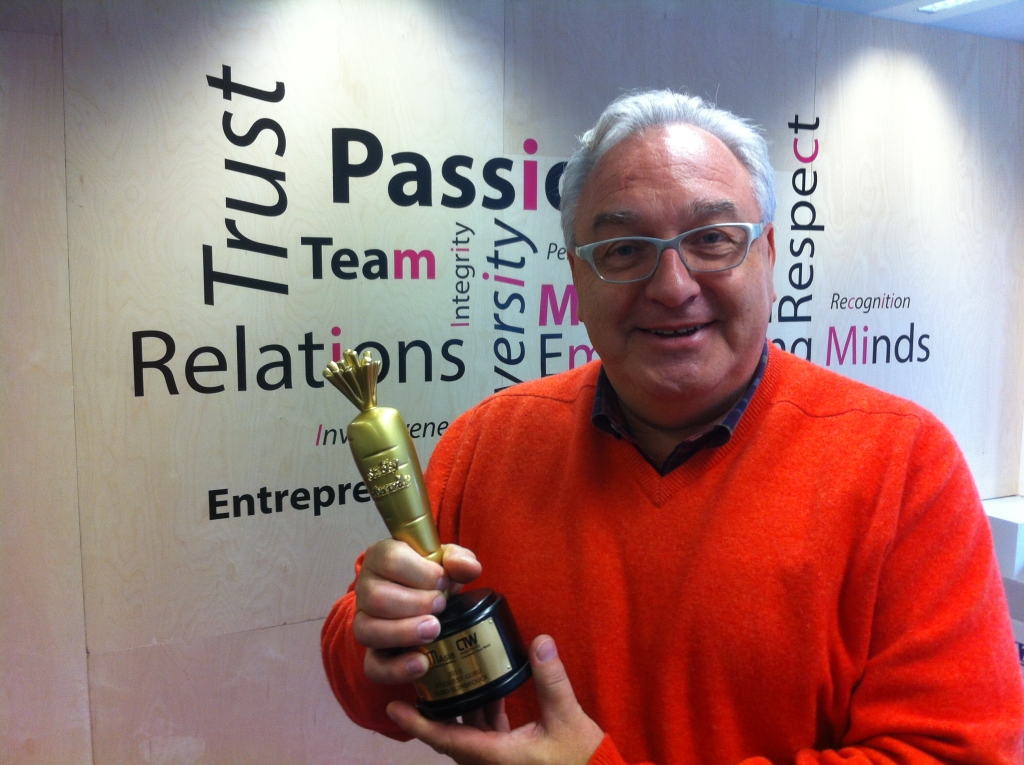
Receiving the ‘Stickiest Guru’ award at IT&CMA Bangkok in 2016
Human resource strategies in the 21st Century
Many people in the corporate environment and especially those in HR know more about employee engagement than I do. But still, too few know what exciting tools we, in our industry have at their disposal. What I would like to introduce in this article is an authentic business tool with which many business owners and human resource executives are not too familiar yet. A business tool that will help you in your engagement strategy in your organization: incentive travel as a motivational tool.
In present days, corporate engagement is about PURPOSE. Some of you may be familiar with the famous TED talk of Dan Pink on the topic of rethinking on how to do business in the 21st century. Learning is a huge part of engagement an engaging people in an organization is fundamental. Multiple Gallup polls and other surveys have proven this over the past few years. What Dan Pink was stating in his talk is that business in our era is all about:
Autonomy: the urge to direct our own lives
Mastery: the desire to be better at something that matters
Purpose: the yearning to do what we do in the service of something that is bigger than ourselves
Cash is no longer king
In the 20st Century, management was all about compliance. Best practices, standard operation procedures, total quality management, certification etc. But in order to be successful in the 21st century, one better be shifting to a new style of management in which self-direction plays a stellar role. A fair and equal salary will always be the basis of engagement but high performance will only come after you motivate intrinsically. 20th century cash rewards and incentives often destroy creativity. This has been scientifically proven. The secret of high performance is no longer in cash rewards and punishment (the carrot or the stick) but has moved to a higher ground. For contemporary staff, the intrinsic drive to do things for their own sake has taken over. Because to them, they matter more. Just think about it yourself: what was the last experience you remember that triggered your emotion? Close your eyes and picture that event and you will know.
In contemporary HR management, engagement is the most important employee topic. Maya Angelou wrote a perfect quote on this topic: “I’ve learned that people will forget what you said, people will forget what you did, but people will never forget how you made them feel.” This quote illustrates so much about the differences in motivation. Be it extrinsic motivation, like earning a reward or avoiding punishment but more internally. Or the extrinsic motivators which are primarily about cash rewards (less all the legal deductions), points, rewards, competition and always include some fear in case of failure or fear of punishment.
Engagement driven motivation by satisfaction and or pleasure derived from the task itself has a long term effect. But this requires some form of autonomy, a feeling of belonging. It is open to learning and feeding the curious mind. For the recipient it means a self-attained level of mastery and purposeful meaning. This is exactly the area where incentive travel still has its underdeveloped growth potential. Travel is to many a major driver of engagement. It has power and provides depth. A travel experience buys feelings and uses all the senses and emotions.
So, ask yourself first: what is my motivation? What would make me change my behavior in the organization in which I’m active? With incentive travel, we clearly operate in the top level of Maslow’s pyramid. From the area where one has a need of esteem (importance, recognition, respect) to the most upper level of self-actualization. This is the area where one finds challenges, opportunities, learning and creativity.
Whilst cash rewards offer a certain level of safety, even when given as a bonus, in recognition terms cash has very little value and really translates to compensation and benefits that have a short-term effect on behavior. It is merely a transactional tool. When an employer rewards by offering gifts, he or she addresses esteem and love of belonging – this is more about recognition. But if the employer uses incentive travel as a motivational tool, we are talking about operating from a higher ground linked to self-actualization. It can also include recognition as well as career development opportunities, depending on how the program is designed. Incentive travel rewards have this long term effect and a high perceived value.
So what’s the link to engagement? Recent studies illustrate that recognition is highly correlated to improved engagement with both the employee’s work and the organization. A key to the success of the recognition component of the total rewards package is whether it motivates workers in ways that increase the level of engagement with their job and their employer. It is the engaged worker who will increase his/her level of discretionary effort—if the goal is performance—or desire to stay on the job when the goal is increased retention.
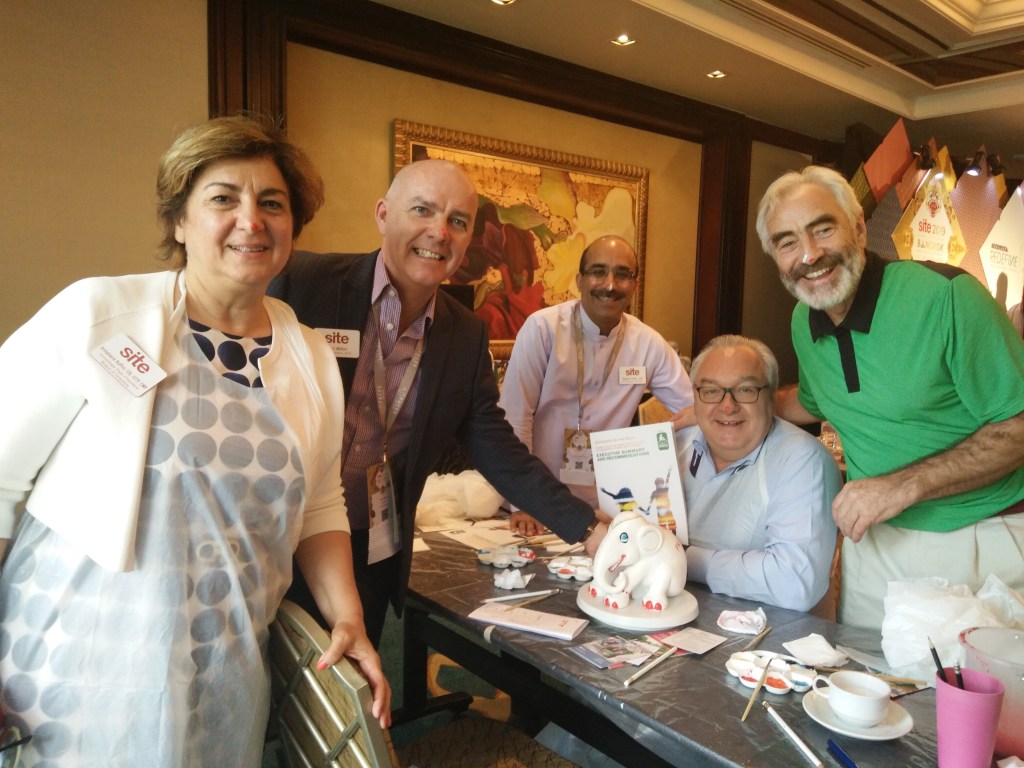
SITE Past Presidents
The extra mile
When it comes to “going the extra mile,” the overall cultural environment in a company plays a key role in determining how far and fast people will run. In a recent study that involved over 200,000 employees in more than 500 organizations the question was asked: “What motivates you to excel and go the extra mile at your organization?” Interestingly, money – often simply assumed to be the major motivator – was seventh on the list, well back in the pack. The key team and staff motivators were:
Camaraderie and peer motivation (20%)
Intrinsic desire to a good job (17%)
Feeling encouraged and recognized (13%)
Having a real impact (10%)
Growing professionally (8%)
Meeting client/customer needs (8%)
Money and benefits (7%)
Positive supervisor/senior management (4%)
Believe in the company/product (4%)
Other (9%)
What can we learn from this? The top choices clearly describe a general level of positive feelings by employees. For this to happen, management must play a major role in shaping the overall company culture.The opportunities are there to develop incentive travel as a motivational tool. I admit I was initially surprised by the high ranking of “camaraderie/peer motivation” and the low ranking of “money.” But when you looked more closely at the research and the questions, reasonable patterns and explanations emerged.
First, this was not a survey of senior management, where compensation is high and frequently a major motivational driver. This research cut across a wide group of employees at all organizational levels. Second, if you consider several of the top responses in addition to “camaraderie” – for example, “feeling encouraged and recognized,” “having a real impact” and “growing professionally,” they describe the level of positive feelings employees have about working in a particular environment – in short, their attitude toward their corporate culture. Is it encouraging and supportive? Does it foster growth? Do they feel they can make a difference? So even though “positive supervisor/senior management” was seemingly very low on the response list (at only 4%), it is after all management that plays the crucial role in shaping a company’s culture. Which leads to the fact that it all starts with choosing the right people from the start: individuals who engage in open communication, thrive in collaborative environments and who can handle pressure with grace. But also people who easily share praise or accept accountability.
These are also the people from whom customers will easily buy. So they do not only promote loyalty but incite to buy more, provide word of mouth recommendation of products and services.
My readers are either working in the meetings and incentives industry or are clients of this industry and may intuitively know why incentive travel works. In this article we will explore the “whys” of incentive travel: why incentive travel works for loyalty and engagement, and how it can be used as a tool to foster behaviour change. We will examine motivation, engagement, reward and recognition concepts, and then use these concepts in developing the rules for an incentive program. From this, you will have the foundation for positioning incentive programs as an investment, rather than cost, for the business. A business tool to drive performance.
Behind every behaviour is a motive
Let’s take a couple minutes to explore your personal motivation. What motivates you to change your behaviour? Examples of behaviour could be going to the gym, complying with a partner’s request to clean the kitchen, using a new software feature etc. What keeps you doing the new behaviour?
There are different levels of motivation for different people.
If you have the ability (that is, the skills and knowledge) and the motivation, performance can change.
People will typically repeat behaviors that are rewarded – and not repeat behaviors that aren’t. Reward the things that are important intrinsically to the individual.
To be rewarding, people need to believe that the behaviour is valuable.
Recognition is a powerful motivator tied to appreciation and belonging needs. For long-term change in behaviours, recognition must be tied to self-worth, purpose and meaning.
When an incentive is included with a goal, the individual is further motivated to achieve the goal. Incentive programs that work include both internal and external motivation elements. For incentive travel to have more impact, we need to find ways to internalize the values and goals – and tie the behaviours to the internal drivers. The trip experience demonstrates something about the importance to the individual, but also recognizes the behaviours required to earn the trip.
Maslow’s Pyramid
In 1943, psychologist Abraham Maslow published a theory in the Psychological Review based on his clinical studies of what motivates human beings to seek fulfilment in all aspects of their lives. Even though there’s more recent research, it still provides a core framework for understanding the different types of motivation:
Physiological needs – food, water, shelter
Safety needs – economic and physical security
Love/belonging needs – social, love, family team (affiliation)
These needs exist all at once, but are driven by different things at different times. For example, you may arrive at work without having eaten breakfast. The first thing on the agenda is pitching a proposal to your superior management. While you’re hungry, your need to maintain your position will trump! One needs to realize that there’s not always evidence to suggest that people need to fill one level before moving to the next.
Where do cash, gifts and incentive travel fall within Maslow’s hierarchy?
The need for food, water, shelter, safety, and security are already fulfilled. In the incentive industry we are working in the top of Maslow’s hierarchy and we are mainly focused on the need for entertainment. Compensation and benefits support a fundamental need, but recognition and career advancement support our higher-level psychological needs. Cash means safety. In recognition terms, this translates to compensation and benefits, whereas gifts are about esteem, love and belonging and they translate more to recognition. Incentive travel is also about esteem but more so about self-actualization. This can include recognition as well as career development opportunities, depending on how the program is designed. So what is the impact of incentives on performance? Cash, being an immediate reward has a short-term effect on behaviour. Gifts are more tangible and result in a mid-term effect. The case for incentive travel is tangible but at the same time an intangible reward because of the long-term effect on behaviour and on perceived value.
From a different perspective: gifts are relational; cash is transactional. Think of cash as 1-dimensional, gifts as 2-dimensional, and the travel experience as 3-dimensional. It’s the difference between attending a live sports event or concert and watching it on television: the impact of the experience is much deeper and memorable.
Employee engagement: the most important employee metric
First of all you must ask yourself, what does an engaged employee or distributor look like? Engaged employees exhibit organizational citizenship behaviours – that is, they are interested in the goals, values and culture of the organization, they contribute to new ideas and are committed to doing the job well. Engagement is the level of commitment and involvement an employee or channel partner has towards their organization or business partner and its values.
A recent Gallup research study published in Forbes showed that, in addition, workgroups with high levels of engagement experienced:
21% Higher productivity
37% Lower absenteeism
28% Less shrinkage
48% Fewer safety incidents
41% Fewer defects
Among the 19 Western European countries Gallup measured in 2011 and 2012, 14% of employees were engaged, while 66% were not engaged and 20% were actively disengaged. Definitions used were “not engaged,” meaning they lack motivation and are less likely to invest discretionary effort in organizational goals or outcomes, “actively disengaged,” indicating they are unhappy and unproductive at work and liable to spread negativity to co-workers.
Worldwide, only 13% of employees are engaged at work. In rough numbers, this translates into 900 million not engaged and 340 million actively disengaged workers around the globe.
So how can well-designed incentive programs build engagement? Well-designed programs will align behaviors with specific business goals. They will foster commitment to the organization and provide better service to end-customers. Seeing the number and cost of disengaged workers – there is a strong case for driving engagement. Engaged employees create loyal customers. Loyal customers purchase more, provide word-of-mouth recommendation of products and services, and participate more with the business (through the store, the web site or face-to-face activities like webinars and focus group participation).
The link between recognition and engagement
Recent studies illustrate that recognition is highly correlated to improved engagement with both the employee’s work and the organization. A key to the success of the recognition component of the total rewards package is whether it motivates workers in ways that increase the level of engagement with their job and their employer. It is the engaged worker who will increase his/her level of discretionary effort—if the goal is performance—or desire to stay on the job when the goal is increased retention. So, how can incentive programs effectively reward and recognize employees and distributors and what is the unique benefit of incentive travel in motivation? Ultimately, people want to feel good about themselves. People value recognition for their work. An incentive travel program communicates that the company is not just shaving off a percentage of profits to get more sales, but investing in providing an experience for those who meet challenging goals. The cost of the experience is tangible, but the benefit – link to intrinsic and extrinsic motivations – may not. Though people may say they prefer cash, non-cash rewards are two to three times more effective than cash rewards. The perceived value of the award is evaluability and separability. Since it’s difficult to attach a monetary value to a non-cash incentive, participants rely on the emotions, the affective reaction and actually value the award more, since it’s difficult to put a price on good weather, fine beaches, great dining…. Cash awards are therefore typically seen as compensation, not as a reward for above and beyond behaviors. Travel awards clearly stand out. Other values of earning the award are justifiability and social reinforcement. Earning non-cash incentives carries more value than earning the market value of the incentive in cash. It eliminates the need to justify its purchase. The harder the participant works to achieve the award, the more valuable the award becomes. Non-cash incentives are more socially acceptable to acknowledge (participants may be uncomfortable talking about cash, but enjoy talking about the gift or the trip to New York). The award has trophy value – that is, it serves as a reminder about the participant’s performance every time it is used or remembered. This acknowledgement from others provides ongoing reinforcement for the performance. Non-cash incentives make a stronger link between the award and the company. Cash, on the other hand, becomes the participant’s compensation – and whatever it is used to purchase is seen as the buyer’s rather than as an award from the company for performance.
Linking incentive travel to motivation, rewards, and recognition concepts
Incentive travel programs are a motivational tool to enhance productivity or achieve business objectives in which participants earn the reward based on a specific level of achievement set forth by management. The program is designed to recognize earners for their achievements. Memory is linked to emotion. The psychological impact of a travel experience is often very powerful. Reward and recognition has the potential to increase psychological well-being by affecting happiness. It’s the difference between how you feel when you remember a great vacation versus buying a new blender. Incentive travel unleashes human potential through extraordinary motivational experiences. Is not it better to collect experiences than money (can’t lose experiences but you can lose your money).
From a corporate perspective, is incentive travel worth the effort?
It is very important to develop a fair rules structure based on engagement. What will draw people in to want to be involved in this program? When a participant is deciding whether an award is worth the effort, they consider the perceived value of earning the award, that is, the match-up between the value of the award itself and the effort required to earn it. They will ask themselves, is the task worth the effort? The utility value seems to increase when offered for additional commitment to a work goal. People need to want it – and the goals must have meaning. This hinges on understanding what motivates the potential qualifiers.
Participants need to have the knowledge and skills required for success, AND the organizational and environmental supports. Otherwise, the program can be de-motivating. Consider the amount of control the individuals have – if the criteria are based on sales and the industry is going through a boom, participants may have the ability to earn the award. That may not be the case if the sales force is located in a region that is depressed. Goals that are challenging lead to greater performance gains than do goals that are easy or impossible stretch goals. Incentive travel program must result in improved morale and a memorable customer experience. The participants must deem it worth the effort!
In conclusion one can state that incentives increase performance by boosting the value people assign to work goals. The program has to provide meaning, rewards, communication, and support to foster utility. Participants can be highly motivated, but if they don’t have the capability of achieving it they will be frustrated. You may design a great program that’s attainable – but unless you have a process to reinforce the new procedures and behaviours, you will get limited results. Keep the program simple and focused. Behind all behaviour is a motive. Incentive programs include both intrinsic and extrinsic motivators. Incentive travel builds employee/customer loyalty and engagement. Engaged participants are more productive and positive about the company. Incentive programs need to be built around rules that make the award worth the effort, attainable, and challenging. Behavioural principles leverage retention goals – by rewarding the top performers – as well as motivation goals by moving the middle performers to higher levels of achievement.
The schools are out and many students have strived for excellence, not necessarily perfection. We have all been there, trying our best, often pushing beyond our limits to prepare ourselves for the life ahead. But is that a good idea? Is not seeking perfection what we should be doing in our work? I have often found that being obsessed with perfection can be an obstacle to progress and development. Eating away time which can be spent on creative thinking?
Thinking back to a problem solving course (Kepner-Tregoe PSDM) that I attended many years ago, I believe that thinking and over striving takes away the road to finding creative solutions and ultimately the ability to innovate. Too much left brain thinking is not good for the creative soul. Especially when, in our event business, we look for new ways to dream, inspire and excel. Too much process thinking slows down the creative momentum.
For that reason I suggest we should look beyond the briefs which land on our desks every day. They rarely describe the main business or organizational purpose the client is pursuing. What is their ultimate business goal, where do they want to take them in their strategic plan and especially why do they want to do this? The need to organize an event cannot be the purpose. But the ultimate goal they want to pursue is often not told. Striving for perfection in event delivery takes us away from the ultimate goal of organizations and by only focusing on perfect delivery, we take away the opportunity to let them pursue a DREAM. We are not helping them in this process of their audacious goals if we do not offer to partner with them to find the solution together. So it should be our purpose as event planners to facilitate this beyond traditional event management design.
How can we help? First of all by not doing it on our own. An event planner may not have knowledge about the purpose and goals of the marketing director or the C-suite. They may not be knowledgeable about long term plans within the corporation. In order for us to be successful, we should not only focus on delivering the perfect event according to clearly elaborated briefs but bring those different stakeholders to the table. We must involve others in the conversation, both from the client and event management side; putting smart minds together so that an event can be approached both from a strategic and economic perspective. It is our responsibility to help elevate our client to this higher ground, rather than purely delivering on an event brief.
But how do we ‘sell’ this idea? We need to put the process in the client mind. First of all by bringing decision makers together and secondly by letting them ‘dream’ the solution to their challenge. For that we must make it visual. A picture tells a thousand words. Or as a friend of mine who is on the board of WWF once said, “Cute teddy bears sell better than statistics”. One needs to draw out the solution for our clients. Paint a picture of how you see the outcome of the event. In this day and age, this takes us to technology which plays an increasingly important role in event production. Pre, during and post event, but to start with, as a sales tool in the design process. But do not focus on drawing the sketch; use the sketch to draw out the underlying idea and thoughts. Visualization will help to work towards the client’s purpose more than perfect execution of logistics and operations and event process delivery.
The use of data is critical to set the standards of an event but its ultimate success will depend on the creative input you bring to the table. Working towards creative solutions will require stepping away from your desk to seek alternative environments that will facilitate the process more beyond standard operating procedures and delivery. Whilst these are important to create a framework and set standards, being drowned in details takes away precious time to focus on creativity, e.g. redesign meeting room set ups, break up large audiences, and limiting one directional communication dissemination, to involve the participants from the event creation stage onwards and get feedback after the event on how breaking up traditional set ups has facilitated the creative process.
Mess things up! Apply mixology to event planning. Walk on the edge. Look at things from a different perspective. The minute that you take away traditional processes or force the client to break away from their assumed ‘perception’ of what an event can achieve, is when you help them the most. Disruption as a basis of re-creation, will expose them to see the many sides of a problem and alternative options and solutions. This way creativity becomes effortless. It is our task to facilitate thought provoking dialogue and ‘big picture’ thinking to produce meaningful creative solutions.
By pushing yourself and your client in new and creative ways rather than relying on the common misconception of total quality delivery, you will be able to break out of the inclination of trying too hard to achieve. By striving forward and upward, by remodelling your view of the world and ultimately your client’s view and by developing new patterns of strategic foresight, you can achieve excellence, without breaking a sweat.
Using our business tools of meetings and events and bringing people together to a level where magic happens is the ultimate purpose in the events industry. The standing ovation that you will get at the end of the event will be your measurement tool!
Almost all my career I have been involved in sales. It has been a passion to share my professional dreams and have people buy from me. But convincing people to buy products or services is not easy. Especially if it is something the customer or prospect does not want or has not been waiting for. So as a sales person you can easily come off too pushy and eager.
It’s incredible that still today, after so many trainings going on in the hospitality and meetings industry, I see sales managers, directors of business development – or whatever they call themselves – walking up to me and start spitting out features but no benefits of their product. Will they never learn? I agree that striking the perfect balance in sales can be difficult, but it’s less difficult if at least you follow the basic rules of selling. Something that’s completely necessary to learn if you don’t want to come across as unprofessional to potential customers and make a bad impression of your company. Talent is great to have but selling techniques can be learned.
So where does it all go wrong?
In my home office, I have a little frame that I’ve kept for many years. It says ‘selling is not telling but asking’. The person who asks the questions is in charge of a conversation and lets the other person feel important. While it’s important what you want to sell to your buyer, not asking the right questions will slow down the process or not get you anywhere where you were hoping to go.
“When I was at Hilton – in another life – we had it written all over the wall of the sales office: Who, What, Where, When, Why and How?”
The sales person’s questions will direct the conversation to the point where I, the client will start asking questions. And here it is very important to listen pro-actively-or at least to respond to my questions and concerns. Not doing so is a huge turn-off. So make sure to pay full attention to what I’m saying as your potential client–selling is a two-way street! And sometimes the answer will be in between the lines or you will have to read it from my body language or my tilted eye-brow.
Are you talkin’ to me?
Now that you have asked the proper questions and you are getting the right questions back it’s important that you have done your homework! Because there’s nothing worse than being caught off guard when I will ask you about something you’re supposed to know. Especially when you’re attempting to convince me to purchase it. Make sure you know your product and service intimately well before you make any sales call. So that you can answer all but the most personal of questions. Product knowledge also means in my dictionary knowing who your competition is and what their product is like. What are the advantages and disadvantages of your product? So selling is not only talking but listening carefully too.
Sell me a hamburger!
I’m often told that people buy on price and I’m not convinced that is true. I buy something that I need or which will make my life, my job or that of my client easier. I don’t buy something purely on price. Price does not even come in the first 3 reasons why I would buy something although staying within budget is always on my mind. If you are withholding the price to later in the conversation you will appear less pushy and more empathetic to my needs. Hold onto the price until you have a firmer grasp on the situation and the potential outcome. And when you sell on price, sell it according to what a friend of mine called it the ‘hamburger model.’ Just imagine the two buns, the meaty part and the salad inside. The two pieces of the bun represent major benefits, the vegetarian particles some fringe benefits and the meaty stuff the price itself. It comes as a total package and well-motivated. So I suggest you start of selling on price by first presenting me a benefit, you then call the price, throw in some more minor benefits and close off with one of the key benefits of your product or service. Capeesh?
Private investigations
I mentioned the eternal features and benefits before. The main obstacle that I have when I have to decide whether or not to buy something from you is how the product will benefit me or my company. Selling the product’s features as potential future benefits is something that will persuade me to buy. Nothing ticks me off more than receiving a canned presentation for a product or service that has nothing to do with my comfort and my company’s unique needs. Making me into just another person to sell to reeks of unprofessionalism. When I’m being sold to, I like to see that the seller has done his or her homework and understands who we are and what we do. Today there are many more ways to find out and social media has made it easier. When I prepare for sales calls, the first thing I do is look into what data I can find on the person and company who I want to sell to. For that I go first to our CRM system to look up the history and experiences our company may have had with them. Secondly, I will look up the prospect in LinkedIn Pro (or similar platforms like Facebook, Xing in Germany or Viadeo in France). I check what I can find on them on Twitter or Instagram. And study their website for sure. This will give me even more perspective on the company and the person in particular before I call them to make an appointment! If they are really interesting and if they are not in my professional network yet I will ask them to connect. Or connect with them after the call. May I suggest you do the same?
The art of articulation and eloquence
Even though it’s not necessary to be the best speaker or writer who ever lived, it’s definitely important to demonstrate good speech and impeccable grammar and spelling in your dealings with customers. Be it in emails or on social media, the rules have not changed. Otherwise, you will give the impression that you don’t care much about the product you’re selling–and if you don’t, why should anyone else? I do not want to hear the words we and I too much. Start your sentences from the client’s perspective, use you and your. And never forget that a picture sells a thousand words!












 Destinations & Events