Featured

The Lightness of Being a Beginner

It has been a long and beautiful ride. It all started with a daring move. On June 16th, 1976 I parked my bicycle against the wall of a hotel in my hometown Bruges and walked in to ask if they had a job for me for the summer months. Just like that. In from the deep end! A cold call. The next day, I started my career in the hospitality and meetings & events industry as a dishwasher/baggage handler for the Holiday Inn Bruges. Only a few hours into the job I made my first tip! From a guy who, on first sight, looked very much stronger than me. An Austrian traveller, with plenty of luggage to carry, had asked for his baggage to be brought it up to his suite and he gave me a generous tip. At that time, Mr. Schwarzenegger had not yet come up with his famous one liner ‘I’ll be back’ but I dare hope I will see him again in Bruges one day.

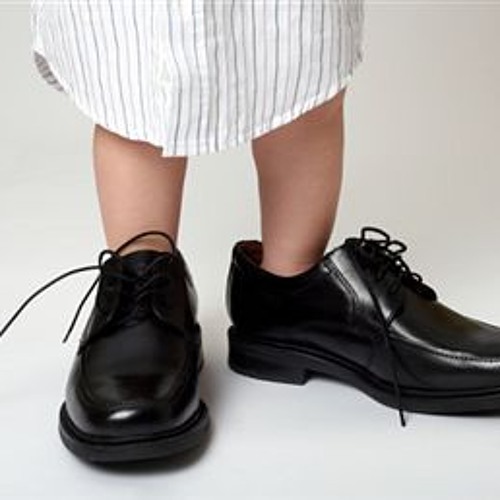
I was a happy child in the sixties and seventies when Europe veered up in the post-war era. For my parents, life was tough. For my father, a shoemaker, and my mother a housewife with four children, times were not always easy. But their hard work, stamina and perseverance got us through. I was lucky enough to be able to go to college and every year dad took us on a summer trip around Europe with the whole family crammed into a small second-hand car. These were my first travels. This was the age of Eddy Merckx, the Kennedy’s, the Beatles & the Stones, Elvis, Woodstock and the hippie movement. At that moment, I did not realise yet that one of those hippies would make a big mark in my career.

Not having had the opportunity to continue my studies at university level, I had made a promise to myself that somehow, some day, some way, I was going to travel the world. That was my dream, that became my mission: travel the world and have someone else pay for it 😉. This first hotel job gave me that window of opportunity. When months later, I was working night shifts at the reception desk, Ben Ancher, our GM (or Innkeeper as we called them) discovered that I probably had some talent and certainly a desire to pursue a career as a hotelier. He promised he would help me, but first I had to read a book. He walked to his apartment and came back with Arthur Hailey’s ‘HOTEL’. A bestselling novel (that was later turned into a movie with Rod Taylor and Karl Malden) revolving around an elegant but old hotel in New Orleans.

From that moment on, the hospitality industry inspired me. After reading this novel, my mentor gave me plenty of books and training manuals to read and study. I also took some evening classes so I would be able to climb up the corporate ladder as a hotelier, a tourism and business events expert. Soon enough I ended up in sales, which was and always would be my true vocation. Beautiful years followed as a sales manager for our 4 Holiday Inn hotels franchise in Europe, the exciting 5* Don Carlos Hotel in Marbella, the launch of the Compagnie des Wagon-Lits’ Pullman International hotels in the Benelux, the expansion of the Sofitel brand in Northern Europe, Hilton and ITT Sheraton. My Hilton years in the early nineties under Fernand David were probably the most inspiring in terms of learning whilst my years in Marbella had allowed me discover the world of incentive travel and becoming a frequent traveller myself.
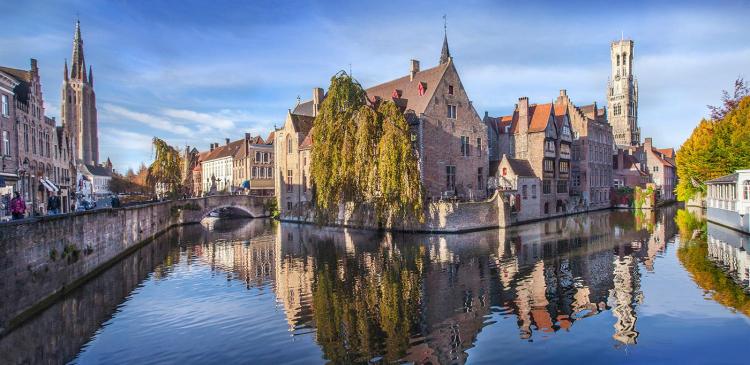
Personal reasons brought me back to my hometown in 1995 where I created Meeting in Brugge, the local convention bureau in the form of a joint venture between the private sector and the city of Bruges. This was also the time I got more and more involved in SITE and MPI and learned about the power of education, peer to peer learning and business networking in meetings and events industry associations. But, by the early 2000s, the historic city of Bruges was again too small for me and I moved to Brussels to take up the position of General Manager in one of the leading DMCs. 

In the meantime, I had joined the international board of SITE where I was flanked by some of the incentive industry stalwarts like Patrick Delaney, Paul Flackett, Fay Beauchine, David Ridell, Carolyn Dow, Bill Boyd, Padraic Gilligan just to name a few as well as a friendly Swiss guy called Roger Tondeur. Roger (the former hippie) had a dream, and I wanted to be part of the team that would make this dream happen. In 2006, the year that I was voted global president of SITE, I joined MCI and together with Padraic and Patrick and a handful of great colleagues we put the first global DMC brand into the market. Our promise was to service our clientele in 100+ destinations around the world. And so we did!

This all happened fourteen years ago and what a ride it has been! I travelled the world one day out of 3, built a network of about 50 Ovation Strategic Partners covering 70+ destinations. In the meantime, I remained a fervent supporter of SITE and as a past president of JMIC, I was often invited to speak on the topic of incentive travel, destination services and marketing all over the world. This also allowed me to give back to our industry community by educating young professionals, sharing best practices and mentoring future leaders. What an incredible worldwide network of event planners and professionals this has given me and what a wealth of human capital this represents.

All went well, until February 28, 2020 when I came back from a trade event in South Africa. Since that day we have been confined to our homes. For the first time in my life I have slept 270 consecutive nights in my own bed! Can you believe that? I even ran out of hotel shampoo… My derrière has not felt the comfort of an airline seat in 10 months. And this boy’s stomach has not enjoyed the wellness of a room service Club Sandwich or Caesar salad either. Furthermore, my hands have seen more alcohol than my liver! But most of all, I have not been able to do what I like most of all and that is business networking, meeting people face to face, creating connections, selling face to face. Meeting clients, doing presentations, selling and speaking at trade shows and events, organising sales missions and networking events and having fun with our multi-cultural group of partners, colleagues, prospects and clients all over the globe.

The Covid-19 pandemic has had its toll on every single person working in this industry. Dramas have unfolded with people being furloughed, families losing income, companies downsizing and some going bust. Unnumerable freelancers on which our industry depends are now looking to find a job on the outside of our industry. There has been a lot of talk about the loss of income but what is worse, is the waste of highly trained and experienced talent. When shall this end? No-one knows. Best estimates are hoping for as early as Q2 next year now that the vaccines have arrived but more likely this situation will not return to normal for at least another two years. No fun times for our industry. And how will that ‘normal’ look like then?

And yet, the last few months have not been in vain. We have seen how our community got together. We learned about new technologies, we recreated programmes and developed new activities. And we shared a lot of our learnings peer to peer in digital chats and formats. Strategies were revised and the positioning of destination services companies have been re-evaluated. All this has showed again how resilient and creative we are in this business. 

Many of us have been upskilling and reskilling over the past half year and the MCI Group have demonstrated in this respect to walk the talk rather than to sit back and wait for the storm to pass. We did not just bring our ship in the safety of the harbour, we put the vessel in the dry docks and re-fitted it for the future. In the meantime we delivered more than 1000 virtual and hybrid events around the globe and we can truly say that we start to master the game. As a company MCI must use this opportunity to improve its customer experiences (virtual, hybrid or live) within the boundaries of confinement. Covid-19 has accelerated our digital transformation and client approach. We learned that hybrid events augment the client’s ROI, allows us to expand audiences and are therefore here to stay.

With all these changes and hardship still ahead, I believe the time was right for a retreat from MCI. These times are not much fun for our event planning clients, and they have not been much of an enjoyment for our DMC partners, free-lancers, and suppliers either. We all suffered too much and it looks like this situation will not return soon to the levels of business and activity we had in destination services before the pandemic hit us. Virtual and hybrid events are now the new line of business in the short term but only a partial solution because the nature of people is to meet in person! Virtual event specialists are having most of the fun for the moment – a new profession was born. But we all long for face to face meetings to return.

Alles gaat voorbij
Maar het goede blijft altijd bij
Nu al een gemis

(Herman Van Rompuy)

But, this is certainly not the end! I look forward to remaining active as a brand ambassador for Ovation Global DMC and the MCI Group as a whole. I will certainly miss the inspiring and fun interaction with my colleagues with Ovation Global DMC and at the MCI Brussels office, my professional home away from home. MCI is going through a complete rebranding from an event management to an engagement agency and is ready and able to tackle an exciting new future. At MCI we believe the future of live events are phygital: fully integrated live and online engagement concepts. As for our Ovation Strategic Partners, often the last link in our value chain, each one of them have proved why we have chosen them years ago as our brothers and sisters in arms. They are simply the best DMCs in their destination and will remain friends forever! They made us shine and I could not have done it without them!

So, what is next? I now look forward to continue sharing my professional experiences and know how as an expert consultant to our broader destination marketing, conference, association community and hospitality industry at large for another couple of years. I will be more than happy to train, mentor or speak at international events and share knowledge as well as finding solutions together. And for someone who never missed a day of IMEX or IBTM in his life; it would be odd not to be there next year when the action is back! 

And my immediate plans for now? I am very much looking forward to spending more time with my family, bringing my youngest daughter Lola to school and the hockey club, taking care of my aging father, visiting my children and 6 grandchildren in Bruges, hiking with my buddies around Belgium and hopefully the Alps soon again. I will also further develop my skills as a gardener and transform my little jungle into a green paradise – Capability Brown & André Le Nôtre, you ain’t seen nothing yet!

My life and my career have been beautiful because of the people I met. To you, my professional family, I thank you and I wish you well. Have fun!

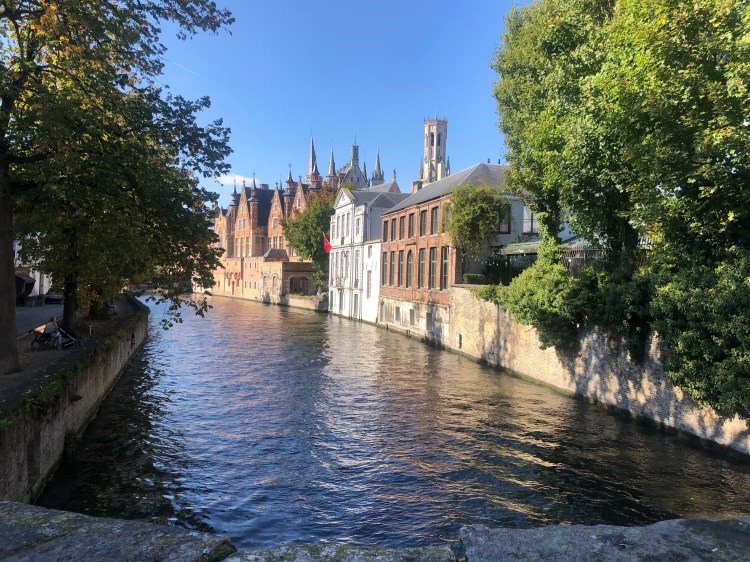
Belgium, the essence of Europe

Situated between France in the south, Germany in the east, The Netherlands to the North and England across the sea to the west, the Kingdom of Belgium is often referred to as the Essence of Europe. 

One of the first references made about Belgium was by Julius Caesar who called us the bravest. In the 8th century also the Vikings came to the same conclusion and had their asses kicked. 

The northern and Dutch speaking part of Belgium  is called Flanders, a flatland crisscrossed by rivers and canals. Flanders is proud of its medieval art cities of Antwerp, Bruges and Ghent. 

Primarily thanks to the Middle Ages and the Burgundy era, Bruges can boast stunning architecture that decorates quaint cobblestone squares and streets. It’s during this Burgundian era that Bruges became one of the 10 leading cities in Europe. In financial terms we invented both Wall street and world trade centers! 

As for the arts, they flourish when wealth is around and so the Flemish masters can be found in any major museum around the world. 

Incredible cuisine is found in a wide range of restaurants. Belgian streetfood comes in the form of fries (not French fries!), waffles and chocolates. And to wash this all down we have some of the world’s most famous beers. 

To the south in French speaking Wallonia, you will find the rolling hills and forests of the Ardennes, countless castles, and the historic cities of Liege, Namur, and Tournai. 

Right in the middle is our capital Brussels, one of the world’s great cosmopolitan and multicultural capitals, home to both the European Union and NATO.  In European politics ‘Brussels’ sounds like a curse word although we have kept Europe safe, without any major conflicts for the past 80 years. 

Throughout history, Belgium, as a buffer state, has been the scene for some major battles and battle field tours are actually quite popular. From the 1815 battle of Waterloo that shaped Europe as we know it now, to Flanders Fields reminiscent of WW1 in the far west corner of our country to the WW2 Battle of the Bulge or of the Ardennes in the far south east. 

Bucketlist items are the Brussels Grand’Place and Atomium. The Antwerp cathedral and train station. In Ghent visiting the castle of the counts of Flanders. 

As for Bruges in particular you should take a boat ride on the canals or climb the 365 steps of the Belfry tower. Today you are amongst the lucky ones to discover the World Heritage city of Bruges. A place that I call home. 

Energetic and carefree, Belgium is undeniably a country of welcoming connoisseurs. Enjoy our hospitality and live like a Belgian for one day. Just one day, until you find out that Belgians pay the highest taxes in the world. We are world champions indeed! 

Without its connection to the sea, Bruges would not exist. Storms and floods opened up waterways that allowed merchant ships to come straight into town. Prosperity took a dip when this sea access sanded from the 16th century. But even then we built canals to Dunkerque and Ostend and inland to connect to the rivers and other main cities. In the 20th century we built the port of Zeebrugge which is now one of Europe’s main ports and the world’s #1 port for RoRo cars and automotive. The Port of Antwerp & Bruges is Europe’s second biggest port. 

A Day Trip to Flanders Fields

Flanders Fields, located south of Bruges, is a region steeped in history, beauty, and solemnity. Known for its pivotal role during World War I, it is a destination that offers insight into the sacrifices of soldiers and the profound impact of war. A day trip to Flanders Fields is an unforgettable experience, combining moments of reflection with the opportunity to explore the region’s cultural and natural treasures.

Endless panoramic views, gently rolling hills, flat polders and a breath-taking silence. The landscape where the terrible battles of the Great War were once fought are now a calm and peaceful natural paradise with limitless pleasure. This green region, sandwiched between the French border and the North Sea coast, is peppered with numerous picturesque villages and attractive towns, where you can not only discover the sad history and silent witnesses of the First World War, but also enjoy a bite to eat and a refreshing drink at one of the many charming restaurants and taverns, often located in the most idyllic settings. A joy for walkers and cyclists. Why not sample a Picon, we thought, the delicious borderland aperitif? One thing is certain; wherever you go and whatever you do, you are always welcomed with the same Westhoek friendliness.

While the historical significance of Flanders Fields is undeniable, the region also offers natural and cultural beauty. The serene landscapes, dotted with poppies that bloom in remembrance, are ideal for walking or cycling. Additionally, the charming towns in the area feature medieval architecture, local markets, and warm hospitality, making Flanders Fields a destination that appeals to both history enthusiasts and casual travellers. The “capital” of the Westhoek is the medieval city of Ypres, once almost completely destroyed in World War I and rebuilt down to the last stone. Thanks to the In Flanders Fields Museum, Ypers Museum and the daily Last Post Ceremony, echoes of the past are never far away.

A day trip to Flanders Fields is much more than a journey through history—it is an opportunity to connect with the past, honour those who sacrificed their lives, and appreciate the enduring beauty of the region. Whether you come for the history, the scenery, or the culture, Flanders Fields leaves a lasting impression, reminding visitors of the importance of peace and the resilience of humanity.

We began our day with an early trip to the region, easily accessible by car from Bruges. The scenic drive set the tone, taking us through picturesque countryside landscapes. Arriving in Flanders Fields, we found ourselves surrounded by rolling fields and charming villages—a stark contrast to the grim history that once unfolded here. Our party started our exploration at the In Flanders Fields Museum, located in the historic Cloth Hall of Ypres (Ieper). This interactive museum provides a comprehensive overview of World War I, focusing on the battles fought in the Flanders region. With multimedia exhibits, personal stories, and artifacts, the museum immerses visitors in the experiences of soldiers and civilians during the war. To get in some daily exercise, we climbed the Cloth Hall’s bell tower for breathtaking views of Ypres and its surroundings.

After the museum, we drove to the Tyne Cot Cemetery, the largest Commonwealth war cemetery in the world. Located near Passchendaele. It is the final resting place for thousands of soldiers who perished in the war. Walking among the rows of white headstones and reading the names inscribed on the memorial wall is a poignant reminder of the human cost of conflict. The tranquillity of the cemetery, surrounded by lush fields, invites quiet reflection.

We took a break from our historical exploration to enjoy a meal in a local restaurant and treated ourselves to traditional Flemish dishes such as stoofvlees (beef stew) served with fries, or waterzooi (a creamy chicken or fish stew). Pairing our meal with a refreshing Belgian beer, of course!

Afternoon & Evening

In the afternoon we continued our journey with a visit to Hill 60, a site of significant trench warfare during World War I. Walking along the preserved trenches and craters, you are able to envision the harsh conditions faced by soldiers. Nearby, the Menin Road offered more opportunities to explore the remnants of war, including memorials and bunkers.

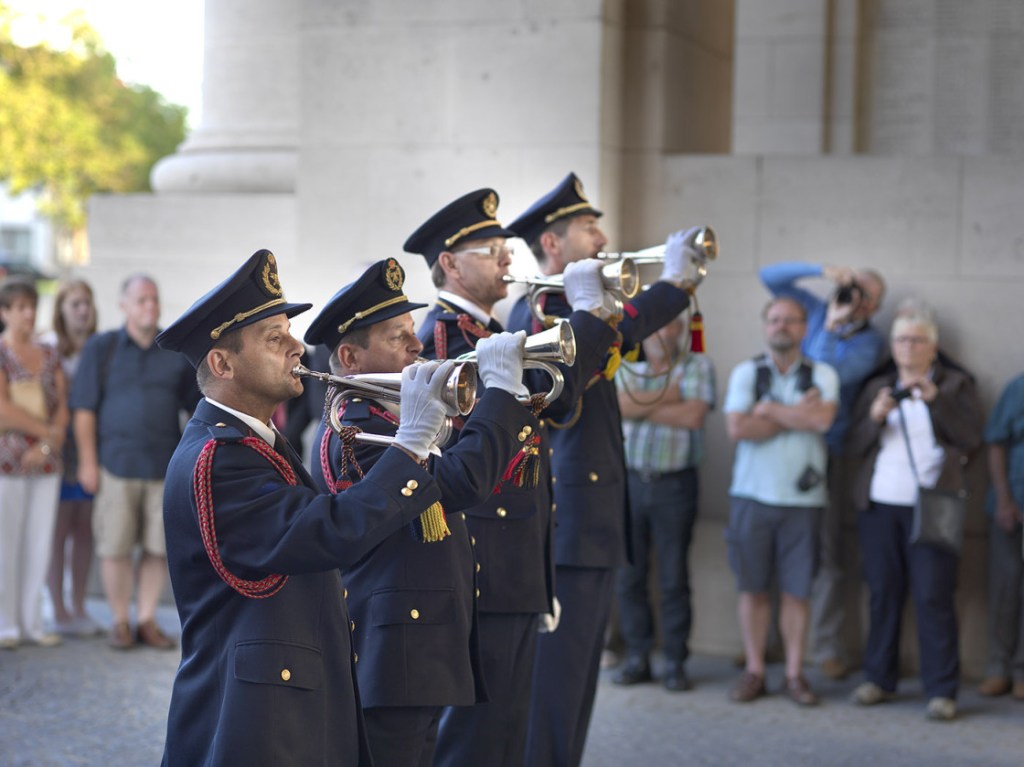
In the early evening, we concluded our day trip by returning to Ypres to witness the Last Post Ceremony at the Menin Gate Memorial. This daily ceremony, held at 8:00 PM, honours the fallen soldiers of the British Commonwealth. The buglers’ hauntingly beautiful rendition of the Last Post creates a poignant and emotional atmosphere, drawing visitors from around the world. It was a fitting end to a day dedicated to remembrance.

Photo credits Westtoer, David Samyn, Stefan Dewickere

De kracht van persoonlijke meetings

Hoewel de opkomst van werken op afstand en hybride werken het evenwicht tussen werk en privéleven alsook de flexibiliteit zeker heeft verbeterd, zou niemand ooit hebben gedacht dat inmiddels ongeveer één op de drie werknemers parttime of zelfs fulltime vanuit huis werkt. Voor bedrijven heeft dit geleid tot een behoefte aan meer mogelijkheden voor betrokkenheid en verbinding in het echte leven, inclusief verbindingen tussen leiderschap en werknemers, bedrijven en klanten, en bedrijven en het publiek dat ze willen betrekken.

In deze nieuwe realiteit kunnen persoonlijke evenementen zeer waardevol zijn. Terwijl TEAMS-bijeenkomsten gemak en toegankelijkheid bieden, heb ik gemerkt dat interacties in het echte leven tijdens jaarlijkse bijeenkomsten, trainingsseminars en gebruikersconferenties diepere verbindingen, samenwerking en verstandhouding kunnen bevorderen die moeilijk te bereiken zijn in een virtuele omgeving. Bovendien helpen evenementen als deze, door belanghebbenden op één plek samen te brengen, bedrijven de ecologische voetafdruk te verkleinen van het vliegen van leidinggevenden over de hele wereld om klanten of partners individueel te ontmoeten, waardoor de milieukosten van het zakendoen worden verlaagd.

Op basis van mijn ervaringen met het werken met bedrijven om hun strategische evenementplanning te verbeteren, volgt hier een nadere blik op wat persoonlijke evenementen voor je personeel kunnen betekenen en hoe je de beste resultaten uit je evenementen kunt halen.

Persoonlijke evenementen zijn meer dan sociale bijeenkomsten of reisjes – het kunnen ook waardevolle investeringen zijn in onze mensen, onze merken en het toekomstige succes van onze bedrijven. De voordelen van deze evenementen reiken veel verder dan de directe ervaring en leveren tastbare ROI op vier belangrijke gebieden:

1. Een grotere betrokkenheid en behoud van werknemers

Hoe kunnen bedrijven in een groeiende werk-thuiscultuur een sterke bedrijfscultuur behouden als werknemers fysiek van elkaar gescheiden zijn? Persoonlijke evenementen kunnen mogelijkheden creëren voor meer betekenisvolle relaties, waardoor een sterker gevoel van saamhorigheid en gemeenschap ontstaat. In een onderzoek van de Harvard Business Review gaf 95% van de respondenten aan dat persoonlijke ontmoetingen de sleutel zijn tot succesvolle langetermijnrelaties op de werkvloer.

2. On-Message Leadership Positioning

Evenementen bieden een gecontroleerde omgeving waar de boodschappen van uw bedrijf kunnen worden samengesteld en met precisie kunnen worden overgebracht aan werknemers, klanten, channel partners en uw branche als geheel. Het technische evenement Dreamforce van Salesforce trekt bijvoorbeeld jaarlijks meer dan 180.000 bezoekers. Aangezien het evenement wordt ontworpen en geproduceerd door Salesforce, kunnen de boog en het verhaal van de boodschap van de conferentie nauw worden afgestemd op de doelen en de toekomstvisie van het bedrijf.

3. Versterkte relaties en vertrouwen

Mijn ervaring is dat face-to-face interacties echte connecties en vertrouwen bevorderen – hoekstenen van een succesvolle zakelijke/klantrelatie. Als vertegenwoordigers van bedrijven en klanten elkaar op meer dan een oppervlakkig niveau leren kennen, kan deze band hen helpen zich zekerder te voelen dat ze het beste met elkaar voor hebben bij huidige en toekomstige deals.

4. Versnelde innovatie en samenwerking

Tot slot is het bewezen dat persoonlijke bijeenkomsten samenwerking en innovatie stimuleren. Uit een experiment van Stanford bleek dat persoonlijke teams 15% tot 20% meer ideeën genereerden dan virtuele teams. Het experiment toonde ook aan dat ideeën die gegenereerd waren door in-persoonsteams een hogere originaliteitsbeoordeling kregen dan ideeën van virtuele teams.

Hoe effectieve evenementen creëren

Het creëren van succesvolle bedrijfsevenementen vereist meer dan logistiek en het kiezen van een locatie. Om creativiteit en innovatie te benutten, moet je mensen samenbrengen op een manier die inspireert, betrekt en verbindt. Hier zijn vier best practices om te overwegen bij het plannen van je volgende evenement:

Ontwerp ervaringsgerichte betrokkenheid. Gedenkwaardige evenementen moeten deelnemers emotioneel en intellectueel boeien. Bepaal het gewenste resultaat – of dat nu inspiratie, sterkere banden of een hernieuwd doel is – en bouw de ervaring op met verhalen, interactieve elementen en creatieve ruimtes.

Stimuleer verbinding en samenwerking. Een gestructureerde programmering is belangrijk, maar echte waarde ontstaat vaak op ongestructureerde momenten. Stel netwerklounges, interactieve workshops en/of brainstormsessies samen om spontane samenwerking aan te moedigen.

Creëer inclusieve, persoonlijke ervaringen. Stem je evenement af op de behoeften van het publiek. Ik heb ontdekt dat wanneer deelnemers zich gezien en gewaardeerd voelen, hun loyaliteit en betrokkenheid toenemen.

Meet de impact en verbeter. Ga verder dan het aantal bezoekers. Gebruik enquêtes, analyses van sociale media en debriefings na afloop van het evenement om je aanpak te verfijnen. Koppel statistieken aan echte verhalen om een volledig beeld te krijgen.

Terwijl digitale interacties steeds belangrijker worden, zijn persoonlijke evenementen een voorbeeld van de blijvende kracht van menselijke contacten. Als we investeren in onze mensen, onze klanten en onze industrieën, kunnen we vertrouwen opbouwen, innovatie stimuleren en een gevoel van saamhorigheid creëren dat de grenzen van de samenleving overstijgt.

Bruges motivates

Welcome to Bruges! Welcome to my hometown.  If you are looking to motivate and reward teams, clients or channel partners with a memorable experience then I believe we should talk! Let me share the joy I have of living in this world heritage city with you and your audience.

International incentive programs, corporate events or domestic team building events inspire and engage. They drive success when operated in a city that does not need to prove itself. Bruges has been the playground for corporate Europe since the Middle Ages. The Burgundian era was particularly rich. During this time, we showed the rest of Europe how to organize events, parties, banquets, and tournaments. In the 14th and 15th century already when Bruges was the pivotal trading point between Northern and Southern Europe! So, whether you are planning board retreats, sales incentive programs, or team-building events, you want to create a tailored motivational package that goes beyond expectations. One that is based on an inspiring story of success, the arts and history.

Your programme needs to include luxurious boutique experiences. It should provide culturally enriching promenades or bike tours. Design it to boost employee or partnership performance. A programme that  strengthens client relationships and enhances company loyalty and motivation. Your programme will need to offer exclusive trip experiences. It should offer elite hospitality and true locally inspired itineraries. All this in one of Europe’s most rewarding destinations. For that you will want to partner with a local!

I retired from the international scene and moved back to my beloved hometown Bruges. Now, I offer ad hoc local support. This is based on my acquired expertise in corporate and association events and incentive travel around the globe. Let me help you create your tailor-made programme and deliver impactful moments that motivate your team and elevate your brand.

#brugge #bruges #bruegge #incentives #events #conferences #specialinterest #teambuilding #associations #motivation #guidedtours #conventions #boardretreat #siteglobal #siteunites #local

Creating Higher Audience Engagement In Business Events

Creating an event is a costly project and to be successful, one needs to focus first and foremost on what’s important for the participants or delegates. After years of experience in the events industry and looking at the most recent trends in this field I have concluded that it is very simple if you focus on a few key performance indicators and messages you plan to pass through to your audience. There are many reasons why people will attend an event, be it a business, association, institutional or leisure event but all in all we can shortlist a handful that stand out as basics.

Business events are primarily about educating a community or a crowd. The need for lifelong education is the driving force for this type of events. Delegates will in the first place wish to learn. Not only from faculty but also peer to peer from others participating in the event. Participants primarily will come to be inspired, and some to get certified so they can be regarded as an expert in their field. The choice of excellent speakers and mentors as faculty is therefor of prime importance of these types of events. To be successful in these types of events, one will need to clearly articulate in advance what the educational outcome one can expect from attending or participating, be it a live or digital event. Learning new skills and improving business processes is key in this matter.

Other business events are more about the opportunities for business development. On one side the sellers, on the other the buyers. These events will require a complete different set up, staring for instance from trade shows or events organized by trade associations in conjunction with a conference or symposium. The return on objective here is measurable as it often involves the creation of new partnerships or increased sales. From the buyers’ side of the isle, it is measurable on the basis of better buying, discovering new deals and opportunities. The application of sales and marketing techniques plays a major role in this segment of events as well as a good buyer/seller ratio.

A big motivation for successful events is the ability to create a sense of belonging or connection. Being part of the ‘family’ is one of these great motivators for association events as it clearly identifies who one is compared to other members. Also here, certification will play an important role. Especially when there is a business element to the association. Being a certified individual will set the participant apart from the bigger crowd thus creating a higher profile in terms of competition. It will set the subject matter experts apart from the allrounders and therefor create a competitive advantage. Sufficient time for networking will play a major role in the event creation process. The opportunity to connect and being part of something much bigger than ones own community or environment.

What’s in it for me? Whichever project a meeting or event planner is developing, the focus on the individual, the participant is of prime importance. See the event through the eyes of the participant. What is their career status? What will happen if they do not participate (i.e. creating a FOMO effect). Or for leisure events or incentive programs, how can participants enjoy more, relax better, create unforgettable or unique experiences. For some of them status is important, for others the sense of belonging or opportunities for personal growth. Even bragging rights are important in case of incentives.

One thing is sure, creating events without a focus on creativity, culinary pleasures, fun elements, and any form of entertainment is doomed for failure. Immersive experiences that leverage new technology and curate content to audiences’ needs generates extended interest, focus, and enthusiasm. Furthermore, during events delegates or participants want to step out of the daily routine of work or escape from dull home office agendas. Even board meetings should not be boring. Allow participants to discover new experiences or allow time in the programme to let serendipity happen.

How technology and social media will enhance engagement.

Whatever great event design framework you have created, it will never be successful if you do not communicate about it. Here is where a digital strategy and the use of social media play a major role: pre, during and post the event.

Technology and digital communications must fully contribute to creating meaningful and relevant experiences for the audience. They are tools that bring people together and ultimately strengthen community.  Technology is improving the quality of an event experience. It allows us to extract the data that for us to see what our audience wants. Virtual, hybrid and in-person events, meetings and conferences, as well as incentive programs must incorporate more digital touchpoints, supported by constantly evolving technology. 

It all starts with a first announcement or save the date. Start communicating early about the theme or start passing on key messages of the event. Announce keynote speakers and use testimonials from previous events if that is the case. Use incentives or contests to win event tickets or prizes. If partners or major sponsors are involved this again creates opportunities to promote the event through their channels as long as you keep the overall control on the content and style.

Throughout the pre-event period you will have the opportunity to interview some of the speakers or do a pre-event webinar to showcase the project even better. Use footage from the previous year – video works best but also some stats about who participated.  Use sneak peek communications to boost last minute registrations and to create a sense of FOMO. This all can be crystalised in an event app which will continue its lifecycle throughout the event. Or even beyond to those who did not or could not participate in person, be it live or digital.

Constant communications during the event will motivate participants even more and enhance their event experience. Live interviews from the conference, statements made from the trade floor or quotes from keynote speakers will do the trick. Polls are a powerful tool too especially if you can run them through this event app. Live streaming of some of the sessions or live podcast recordings available to participants or those who can not attend are of great value too. Use imaging of the social events or food and beverage as snapshots on social media channels such as Facebook, Instagram, X (formerly known as Twitter) or even LinkedIn in case you created your event profile there too.  Short daily reports or entire event videos can be produced easily by using footage from the event tech teams as well. These are very powerful communication tools.

A major opportunity to drive future engagement is to repurpose and reuse the content from your event in your marketing channels. Through webinars, virtual events and on-demand video content, event marketers can develop a constantly engaged audience as well as extending the duration of an event. Especially the ‘after movie’, curated event pictures and video footage will help you ‘sell’ the event towards the following project as well. Use this material to thank sponsors, speakers, collaborators and especially the participants. Let your community know where recorded sessions can be found. Testimonials should be used immediately after the event too to activate future projects. And if this is the case, announce the next events so people can pencil them in or plan for budget.  

An Audacious Plan

At the start of every association project, hopes are high. Expectations will be exceeded, deliverables will be timely and members will be amazed with outcomes and recommend peers to join the movement. What we all look forward to is pure bliss, especially in times of trouble as the past two years have proven. Unfortunately, such a smooth plan is not always the case. There are times when projects go horribly off, timelines are missed and outcomes do not live up to the member’s vision or expectation. The realization of success dwindles, creating a threat to membership relations and, even more damaging, the reputation of a business or even an industry.

What consistently yields a positive outcome to projects of all scopes and sizes is far less of a what and more of a who. The true advocates for a project, and the gatekeepers of a project’s heroic success are project champions. Throughout my career I have seen this happen, both in business as in industry associations and councils. A handful of people, with a vision and the ability to communicate and federate, drive a project to completion.

Once all goes well and noses are turned in the same direction, that is when the challenges start. That is when one must carry a message across the field to all stakeholders. It means getting the buy in and support from people, institutions and leadership who often have no understanding or feeling of where we come from, what our intrinsic values are and what the benefits and opportunities are to, in my case our event communities, the society at large and often themselves.

This is what was happening within the meetings and events industry, not only in my country Belgium, but in many other countries around the world in the past two years. It took a pandemic to unite the events industry. Covid-19 has brought the live events industries together in every community. We wanted to do that for many years (just look back on what JMIC or the Events Industry Council have been working on since the start of this century); but it never really happened, did not it? Things like this always need a disaster or a major set-back to kick off a movement, like 9-11, the subprime mortgage crisis or in this case a global pandemic.  The process reminds me of the boiled frog syndrome. This story is based on an urban legend describing a frog being slowly boiled alive. The premise is simple: if a frog is suddenly put into a pot of boiling water, it will jump out and save itself from impending death. But, if the frog is put in lukewarm water, with the temperature rising slowly, it will not perceive any danger to itself and will be cooked to death. That’s often the moment where heroes enter the scene, to kickstart a movement and carry a mission forward.

In from the deep end

I experienced this in June of last year when I was called into my first (online) meeting of our combined industries, cabinet officials and civil servants debating how and when our live or hybrid events industry was going to get going again.

From ‘our’ side, I could feel the frustration mounting after a year and a half of negotiating, building trust, unifying visions, and battling anything that worked against us. When you feel like you have not concorded that mountain yet, there are other slopes and valleys ahead to cross. But the clock was ticking, the fall season and later winter season were looming, and we never received any full get-go because of all the restrictions and regulations bestowed upon us.

From the other side of the virtual table, I observed a different problem. Something that we must work on even harder, and that is building the right advocacy for our events industry, especially towards these policy makers. Let me call a spade a spade: the events industry does not consist of public, mass media events, concerts or festivals alone! Because that is the image our industry often has with the public and people in cabinets who were very much ruling our lives and livelihood. Who was to blame for that? Well, in the first place we should look in the mirror, because we have never fully ‘sold’ our message well or unified our industry under one banner. A big challenge for us to still accomplish, not only in Belgium, but across the world of business events.

At a time where everybody became a virologist, it was time to set the record straight and clearly articulate who we are as an industry and more importantly, what we do for society. It’s time that we focus on Simon Sinek’s WHY!

There have been numerous economic impact studies about the meetings and events industry over the past few years and most of these have been moderate to overly beneficial to the local community. But that is only telling our audience how many people we employ and how much money we create. To be sustainable, we must achieve a greater level of recognition for the benefits we deliver in relation to global economic and professional development as well as investment creation and innovation. Other than economic impact, it is the sharing of knowledge and attracting of investments to our communities that are often overlooked by institutional leadership. (For more details on this, I refer to the article ‘Meetings Matter’ that I published on LinkedIn on May 13, 2020, and of which you can find a copy on my blog ‘Destinations & Events’ here.)

The Event Confederation

Yet we have come a long way over the past 24 months and therefor I want to celebrate two individuals, true champions, who have carried our concerns, gathered the troops and moved forward to work on viable solutions: Bruno Schaubroeck & Stijn Snaet of the EVENT Confederation. Both gentlemen have taken up the challenge to negotiate and communicate on behalf of the Belgian events industry and have tirelessly done so. Because for more than a year, for multiple companies in our field, business has been down: no concerts, no trade fairs, no festivals, no live kick-offs, no corporate motivational events, no incentive trips, no conventions, the list is long. For passionate and hands on people like event marketeers and event producers, these have been horrible times.

During the Covid-19 crisis, the Belgian Event Confederation was founded, with the aim of uniting, representing and speaking with one voice to policy makers, media and influential stakeholders such as the virologists. The Event Confederation currently unites several trade unions: ACC (the events agencies), BESA (the events suppliers), Febelux (representing primarily conference, trade show and event venues as well as PCO’s), BSV (Brussels Special Venues), FMIV (the Flemish Festivals association) and its counterpartner Fédération des Festivals de Musique Wallonie-Bruxelles Festivals Wallonie and UPT/BECAS (the event caterers) and will hopefully be expanding further with other industry associations and strategic partners joining us officially. EC is an umbrella federation that consulted weekly with different cabinets, administrations, corona commissioner, virologists, and the broad supporters of federations and stakeholders around our sector.

Research and Innovation

During the past two years, a lot of advancement was made on the topic of parity committee, the creation of a captains of industry advisory board and extending membership to other trade associations. Based on the findings of two industry surveys, through a partnership with Deloitte and the KdG Hogeschool, a clearer picture was drawn of the size and scope of the industry in terms of companies (2447) and talents (80.000 +). That’s bigger than our Belgian farming community to put it into context! It is fair to say that due to the pandemic, we did lose some of these individuals to other industries though, creating a major challenge to find the right people when we re-start our business.

The confederation, together with governmental authorities worked out several operational pandemic models (CERM: Covid Event Risk Model as well as the CIRM: the Covid Safe Venues model. We collaborated on the development and implementation of the CST (the Covid Safe Ticket) for events as well. And more lately we co-designed the Event Barometer. The group got a seat around the negotiating table and multiple meetings were organized with diverse governmental institutions to safeguard the industry and its talents during the pandemic.

The main result that the Event Confederation has achieved is that our sector is now better known, is more clearly visible and is systematically heard by policy makers. We dare to mark many of the current support measures on our record, because of our resilience and our persistent lobbying and knocking on doors.

But there is still a long way to go. We are certainly not there yet!

The next step is the recognition of Event Confederation as an official Belgian employers’ organisation. This will be a tough cookie for an industry that employs many self-employed talents, free-lancers and SMEs of multiple trades and professions. We strive for this with a view to setting up our own Joint Committee for the events sector. Such an acknowledgment can only happen when the Event Confederation has enough representative members. Because the Event Confederation wants to represent the entire sector in Belgium. From small to large, from corporate to private, institutional to associations, from exclusive boutique events to large audiences, from French-speaking to Dutch- and German speaking Belgians, from Ostend to Arlon, from freelancer to SME entrepreneurs and major players in the field, …. the Event Confederation aims to represents all their voices and advocates for their combined future as an industry.

A new kid on the block

To carry the Event Confederation project forward, the board of EC hired me nine months ago to develop a 3-year strategic plan, drawing together our events industry ‘painted picture’ into an events industry manifesto and to support and build on the groundwork of our two heroes, driving the project forward.  Now at the end of the pandemic this assignment ends here for me and I’m wishing the team all the luck in the further development of the confederation as the official events industry employers’ organisation as well as establishing the joint committee umbrella organisation that will allow us to be known as a strong representative of the estimated 80.000 talents in Belgium alone.

Let me Tell you a Story

The ancient art of storytelling

Throughout history, cultures have told stories to engage and enlighten, to teach or to seek help. Stories establish a rapport between the teller and the audience, the elder and the younger ones, the profet and his disciples, the artist and his followers. In such a way, stories have always created bonds between he or she who presents and those who listen.

Now that we are living in a more digital age, storytelling becomes even more important to pass on a message and engage your audience better. Storytelling will certainly amplify the value of your virtual and hybrid networking events. As long as you do not forget to use the same rules and structure as in meeting face to face.

Stories enable us to engage and inspire our audiences to consider our offerings. Ideally we should position our audience as the hero of the story, and we must think about his or her needs, interests and drivers as we develop the story.

No better way to start than from the beginning. How often have you not experienced a slow start of a Zoom or Teams call? People are squandering about too often from the start. This is a perfect moment to start a conversation and let the audience think and work. Best way to do this is by asking a question for the audience to imagine a story from their past and related to the topic of the call. Much better than loosing the interest from your crowd or having small talk between people who know each other and leaving out newcomers who immediately feel excluded.

Stories are a natural tool for destination and event marketeers, because what we do inherently involves interesting people, destinations, and offerings to those who, like a heroe in a story, meet challenges to achieve their business goals. The more lively you make the story, the more attention you will get. And these stories will not only let connect the audience with the organiser of the call but with each other as well. A perfect way for peer to peer inspiration because people will recognize themselves in the stories of others and discover new solutions they may not have thought about themselves. This way, the engagement begins from the start. When we exchange authentic stories we inspire others, have others intrigued and delighted or feel more confident of the solutions they plan to take. Stories connect people better.

So, how do we build up our story? Let’s find out in the next chapter.

The Lone Ranger

There are many ways to describe which elements a story should have. In his book ‘Story for Leaders’, David Pearl describes 3 elements which he calls the four F’s: fear, fantasy and formula. I have often used 3 other principles: Truth, Empathy and Vulnerability.

There’s always room for a story that can transport people to another place. – J.K. Rowling

Truth for having the courage to discuss what’s on everybody’s mind. It sounds novel to talk about telling the truth in a work context, but really, how often is a lack of facts and truth in your organisation causing problems in your efforts for change? Stop and think about what’s missing from the conversation! People often lack information, which creates fear and a sense of not having control. By disclosing more information and showing a willingness to be honest and open, people will trust you more.

How many times have you heard that management makes empty promises or when there is a big change coming, the spin is ‘this will be good for you’, despite legitimate concerns raised by front line staff. Empathy is showing that you care and you really understand what your community thinks and feels.

The third principle is the hardest one for us to master because leadership were often trained to ‘be the boss’, yet you want to be in control. For that reason vulnerability earns you street credibility with your staff or audience. Acknowledging that you are not perfect, you cannot have all the answers and you should not be afraid to say so. It is a sign of self-confidence. Vulnerability invites your audience to lean in and discover they share something in common with you. They will be far more willing and patient with the bumps in the road ahead if they feel you are just as invested and with as much to lose. In storytelling terms, you are setting them up to continue onto the next chapter and to journey with you, since there is something that still needs to be figured out together.

It is your job to tell a story that others can believe in. This requires more that slick words or lofty promises. It’s your responsibility to articulate a larger cause or reason for being. Show and demonstrate leadership’s commitment to the new goal and to provide the culture architecture that can make it happen.

The power of storytelling is exactly this: to bridge the gaps where everything else has crumbled. – Paulo Coelho

Emotion is key in decision making

Compelling stories evoke emotion in an audience, and emotion is key in decision making. Compeling stories engage us by making us care about the people in the story. Storytelling is the key to change. Nobody likes a change story, people crave for continuity in a storyline. As a storyteller you need to create the stepping stones in your story so that the people in your audience can locate and identify themselves in that new story and see for themselves the reason that what you are proposing is a natural evolution and not a sudden radical change happening. It’s normal that people become attached to the ‘old story’ because it is what they know and have come to expect. It’s the reason for resistance. But by using empathy and transporting themselves in the story they finally make the new story real, their own, as long as it is a tangible, palpable experience that people can point to and say: ‘Look, that future already exists!”. In effect, you are socializing your new story into reality by showing it is already here and how it makes everyones life and job better or easier. In essence you are moving from an old to a new story. This way you avoid as well suspicion and distrust that makes creating a new culture difficult.

Since the future of our business hangs in the balance, it’s important to understand and embrace the power of purposeful storytelling in the workplace. Compelling stories make us want to know what comes next, how the story ends, what happens in the end to the people involved. Compelling stories ignite the imagination of and elicit emotion in the audience. When audiences can picture themselves in your story, they start to picture your solution as the right one for their organization.

The cat sat on the mat is not a story. The cat sat on the dog’s mat is.

– John le Carré

The classical build up of a story consists of 3 elements: the beginning, the middle and the end. In the beginning we meet, the protagonist, our ‘hero’. A character that we know our audience will be able to relate to. In the middle of the story our heroe experiences problems and challenges and you describe how your hero has worked to overcome them. In the end, your hero emerges victorious and changed for the better. Loose ends are tied up into a resolution. So in real life, the story describes first what currently is, then moves over to roadblocks and challenges and how our protagonist is handling those. In the end, there is only bliss, where the hero has overcome the problems and now enjoys the benefits of resolving them.

A Manifesto for the Events Industry

Photo by Sebastian Ervi on Pexels.com

As a past chair of JMIC, the Joint Meetings Industry Council, I have always followed closely what excellent content they have provided on their website since we started the ‘Meetings Mean Business‘ campaign. Only a few months ago, JMIC published its Global Manifesto as a meetings & events industry rationale for the use of business events as primary agents for post-pandemic economic recovery and renewal.

Tasked with the need to re-start economies devastated by the impacts of the COVID-19 pandemic, governments right now need tools and platforms that can advance a broad-based recovery in the most effective ways.

We all recognize that the primary value of the Meetings & Events Industry is the role it plays in facilitating and supporting essential exchanges in the areas of professional, corporate, academic and social development. These are integral to not only economic advancement but societal development as a whole.

This sector is therefore a critical element in delivering recovery as well as transition and renewal that can be immediately utilized by governments
responding to these requirements. JMIC articulates these pathways on its website and promotes a set of consistent, high-level arguments in the form of a ready to use PPT document and Infographic. This way they help you make your case that our industry should be utilized as a strategic tool for recovery, transition, and renewal.

Business Events as Strategic Tools for Driving Post-Pandemic Recovery and Renewal

JMIC’s position is that the meetings and events industry, which comprises a range of efficiently interconnected organizers, service providers, suppliers and facilities engaged in the development and delivery of meetings, conferences, exhibitions and related activities (collectively referred to as business events) can and should be utilized as a highly efficient and cost-effective vehicle for driving economic recovery and renewal by providing an essential platform for the economic, academic, professional and business interactions required to re-ignite these sectors.

JMIC offers 15 pathways for recovery. You can be inspired by them by downloading the infographic from this link: JMIC-Industry-Manifesto-infographic.pdf (themeetingsindustry.org)

Photo by Jonathan Ramael

Important policy implications

To be applied in a practical way, the 15 arguments described in the Infographic can and need to be embedded in government policies and structure. A starting point for this process is an acknowledgment that:

  • Business events are not public gatherings but highly controlled assemblies and should be classified and distinguished as distinct from generic mass gatherings for the purposes of re-opening policies.
  • Business events are economic, scientific and professional in nature and only incidentally tourism-related (in that they support the hospitality economy). They should therefore be seen in the context of trade, economic development, social and investment policies rather than tourism policy..
  • There should be an effort to align business events and overall government policy priorities so that events with the greatest potential to support / advance those priorities (health, education, innovation, major events) can be targeted and more effectively utilized for this purpose.
  • Existing investments in infrastructure and institutions should be reviewed for their potential to enhance competitiveness in the business events market. Financial support and increased competitiveness can often be delivered by offering relief to event organizers for the use of existing government-owned facilities rather than creating new incentive programs.
  • With governments today being called upon to articulate and demonstrate a vision for both health and safety management and economic recovery, business events can be incorporated into such strategies as strategic tools to achieve the stated goals.

The Need to Meet in Person

Photo by Belle Co on Pexels.com

During my 14 years with the MCI Group, I was very much inspired by several of my colleagues from around the world. Some of them really stood out and Juliano Lissoni is certainly one of them. We met in Sao Paulo first, some ten years ago but later Juliano moved to Canada to take over and further develop the region for the group. Earlier this month, PCMA published an interesting article from him which is so good that I asked Juliano to share it on my blog as a guest article.

 “I’ve recently challenged myself to go beyond the noise and the bias of why or why not our business of making people to come together should persist in the future. We should not assume that just because technological tools are evolving, we will only want to gather in a digital format. Trying to understand what the future of the events business will look like requires us to have a deeper understanding of our human needs, particularly those that are biological and anthropological, emotional, and economic.

The COVID-19 pandemic brought an immeasurable amount of stress into our lives, both in economic and physical terms. Limitations of movement necessitated by physical distancing — leading in some cases to outright lockdowns — took their toll on citizens and businesses alike. But for companies in the travel, tourism, and events industries, the pandemic bore down like a tsunami, turning hotels and conference halls into potentially danger zones.

Fortunately, humans are resourceful, and the combination of curiosity and innovation soon played out in our need for socialization. While COVID-19 changed how we engaged with our teams, partners, and clients, it did not eliminate our need to meet altogether. We had to initiate a sudden mastery of the digital meeting and its creative tools. It didn’t happen overnight, but in a six-month span, the ability to meet, connect, and communicate effectively increased via digital tools, if not altogether enhanced. In many ways, COVID-19 took the human tendency to think about what’s next and fast-tracked hypothesis testing in terms of digital transformation and experimentation.

With the restrictions imposed in every part of the world, the events industry took a deep dive into creatively combining content delivery platforms and digital broadcasting. The concept of “content is king” was amplified by the immense potential audience size — where scale was not limited by fire codes and the different time zones in which that global audience operated —leading to a complex business model for organizers. Now as signs indicate that a return to life as we knew it is on the horizon, players in the events ecosystem are flooded with questions on how to manage the future. Will events go back to the way they used to be? Will events be digital forevermore? Will we advocate for a blended world of “phygital?”

Photo by ThisIsEngineering on Pexels.com

The answers to these questions are not easily found, even as scientific communities progress with vaccines. Who we are and where we work also defines our preferences. The advancements in technology are creating changes in our patterns, from changing our physical activities to complementing our analytical and information retaining capabilities.

Some advocates of Darwinism suggest that digital tools will potentially replace interpersonal human connection. But where the events business is concerned, we should not assume that just because technological tools are evolving, we only will want to gather in a digital format. Human beings are far more complex than this, with preferences for social gathering being influenced by propensity to imitation, cultural homogeneity, ethograms, and symbolic behavior. So, trying to understand what the future of the events business will look like requires us to go beyond technology and have a deeper understanding of our human needs, particularly those that are biological and anthropological, emotional, and economic.

Photo by Gabby K on Pexels.com

We Have a Biological/Anthropological Need to Meet

The traits that make us uniquely human come from our approach to cognition, communication, and language, including the largely innate and physiologically complex phonation, and the mechanisms of learning. As highlighted by University of Amsterdam professor David Baker, collective learning is a trend seen across human history, and it is a potential unifying theme of evolution and progress. Collective learning was central to the agriculture and industrial revolutions. And as per research from University of California, Davis professor Peter J. Richerson and University of British Columbia professor Joseph Henrich, the innate components our social psychology were shaped by cultural group selection and cultural evolutionary processes.

A cumulative culture is a result of the evolution of our cognition and the social learning. We humans are social organisms that evolved not only by developing knowledge and traditions, but also by passing them along by means other than human language, including gesture, and physically embodied forms of cultural knowledge. Humans came together at first for security. And as groups expanded, so the need for energy supply, which eventually contributed to the development of methods and processes in agriculture, expansion to new geographies, and the search for innovative resources.

Evolutionary psychologists maintain that not only did our human evolution follow Darwinian principles represented by inheriting brain traits from our ancestors, our “clan living” in fact gave our brains more synapses. Our social psychology evolved as we learned how to solve problems using cooperation, and our tribal social instincts helped to design current institutions and social norms.

In this context, the advancement of digital tools is helping us to share collective knowledge and redefine the concept of community. While it is tempting to assert that human learning processes will be accelerated by digital technologies, there is a big question mark as to whether it will be enough. Production and comprehension are affected by our social intelligence. Features of other individuals and the environment help to define social situations, affecting our social strategies.

Our brains are social by nature, we are wired to connect, and as referenced from psychologist Daniel Goleman, our brain structures are built for relationship optimization due to spindle cells — the fastest acting neuron that guides our social decisions — and mirror neurons, which make us capable of predicting the behavior of people around us by subconsciously mimicking their movements.

In their evolutionary anthropology study, Loyola University Chicago professor James Calcagno and Princeton University professor Agustin Fuentes identified that for cooperative (and selfish) reasons, our brains are wired to use language, social interaction, and behavior to try to understand the minds of others.

When it comes to business events, creating opportunities for people to come together in the same space is not about content distribution, it is about reinforcing human connections through social intelligence and amplifying the effects of knowledge spillover.

Photo by cottonbro on Pexels.com

We Have an Emotional Need to Meet

Research by University of Wisconsin-Milwaukee professor Benjamin Campbell from the indicates that the human amygdala — part of our brain’s limbic system regulating behavior — makes us more emotionally sensitive to our social environment. The development of our emotions is part of human evolution. Back in time, chasing food, finding shelter, and dealing with all types of wildlife problems required humans to trust their minds — their thoughts and emotions — to guide them through every situation. Survival was a consequence of trusting the emotional radar and reliance on instincts as the first screening for information that was received.

There is a lot we can learn by observing evolution in primates. A monkey raised in cages in isolation does not thrive. Even a monkey with a doll that looked like another monkey did better than the monkey with no doll. As primates, we humans are not that dissimilar. Isolation is bad — but why are groups better than having one or two buddies?

A study from University of Illinois professor Patrick Laughlin, for example, tested the relationship between group size and performance compared to an equivalent number of individuals, finding compelling evidence that groups are far better in performing complex problem-solving tasks.

Another study led by Jahn Cornwell and published in the Journal of Sports Management, shows that being in a group while attending a sports event makes us feel more involved, be fully conscious of the activity, and the long-lasting memories making us to want to come back. Consequently, being in a group has a positive impact in our emotional lives. And emotion influences our cognitive processes with a marked influence on attention, by modulating it motivating action and behavior.

Photo by Pixabay on Pexels.com

We Have an Economic Need to Meet

Attending events and conferences, joining informal discussions, and getting to know what others are working on and what progress they are making, are all critical steps for innovation. A team of Harvard Medical School doctors analyzed all medical research articles published at Harvard and correlated their data with the distance between the authors’ offices. They found that being less than one kilometer (approximately a half-mile) away raised the quality of research — with even better results if researchers were in the same building.

This knowledge spillover effect is a proven byproduct of being physically together at some point. Another seminal study from Wesley M. Cohen and Daniel A. Levinthal noted that knowledge spillover increases how we assimilate knowledge from the environment. Connecting with people and knowledge spillover are two elements that digital will enhance, but not replace.

The context of business events also creates the learning beyond, translated as what happens when we embrace new initiatives in the direction of our curiosities. We learn not only from the available content, but also through our social intelligence and interactions. Recent studies from cognitive neuroscientists Robin I.M. Dunbar and Susanne Shultz using statistical and comparative analysis techniques show that there is a clear relationship between neocortex size and sociality.

This social intelligence has a deep impact in the way we engage. The approach to cooperation is behind problem-solving for societies across history, so cooperation is behind innovation, social gathering, and evolution. While we accelerate or scale up learning with the right use of digital technologies, our need for close cooperation in groups remains.

We humans manifest complex structures of language, communication, culture, ethograms, and symbolic behavior. While we understand the impact of technology and how digital experiences can help us, our inventions need to be harmonized with our biogenetic and evolutionary identities. While our brains have had to adjust to the realities of lockdown, there is much that we miss from life in offices — most especially, seeing and interacting with colleagues. While technology will enhance our ability to communicate, it will not replace one of the most striking elements of our evolution: our social intelligence. Being together in person, in groups, matters.

In trying to provide a window into the future of the events business, it is fair to conclude that we see an omnichannel path ahead. Digital tools will enhance the way content is distributed and meetings focused on knowledge-sharing have a longer runway in digital, but as creatures with social brains, our evolution requires being together — either for triggering the right emotions that makes us feel part of a community, or for how we economically evolve by co-innovating. It is not Zoom we are tired of. We simply crave a return to meetings and conferences, meeting people, and shaking hands, because it is in these environments that we thrive.”

This article was written by Juliano Lissoni  and previously published by PCMA

Outsider Help from Insider People

Business Support Services for SMEs and Associations

As an small or medium sized enterprise business owner, association executive or board member, you probably need help at certain times developing and implementing ideas, plans and actions. That’s where my partners and I at WeCare.Associates comes in!

Easy! Timely! Quality!

*  We pride ourselves in creating significant value for our clients in supporting them when they need help. We would like to do the same with you - whether it be for a small assignment or a long-term initiative. 

*  We are a business cooperative of client-centric professionals, experienced in healthcare, media and hospitality sectors. Each of us has lived and breathed your challenges and knows just how to get the job done. 

Our mission is to simplify your business challenges and decisions, giving you the tools and support to help you manage every aspect of your business. We’re easy to work with, deliver on time and offer quality – always.

Expertise is key for good medicine. The same applies to successful and efficient associations. These experienced professionals are competent, trustworthy and healthcare association experts.

Michel Baillieu, Executive Director BioMed Alliance

What we can do for You

Board Retreat Facilitation

Conference Moderation

Copywriting

Event Management

Executive / Staff Coaching

Fundraising & Sponsor Sales

Governance

Healthcare Compliance

Marketing & Communications

Membership Design

Press & Media Relations

Procurement & Vendor Management

Project Management

Stakeholder Management

Strategic Planning

Contact us at WeCare.Associates by sending an email to hi@wecare.associates or simply call Hugo Slimbrouck on +32 475 755 273 or Bruno De Man on +32 475 664 754